
Last updated October 16, 2026
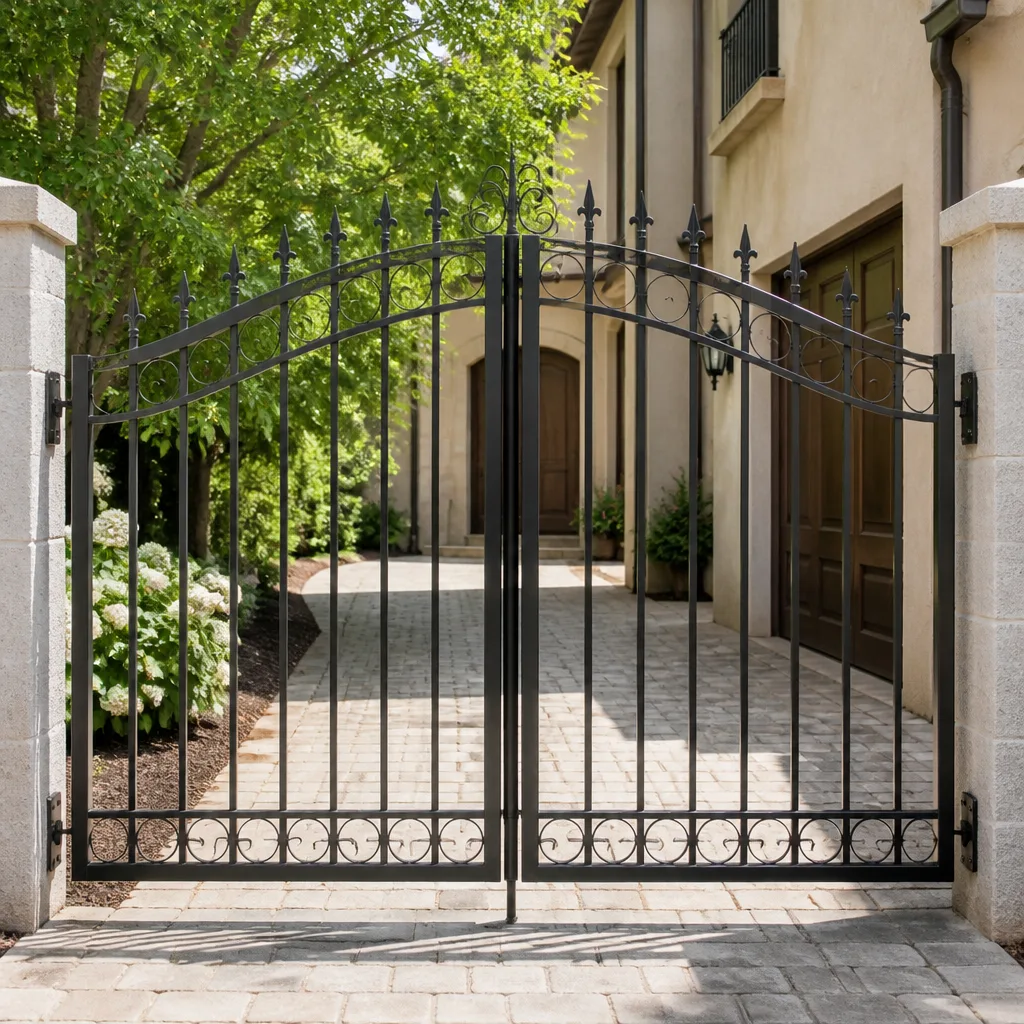 Wrought iron
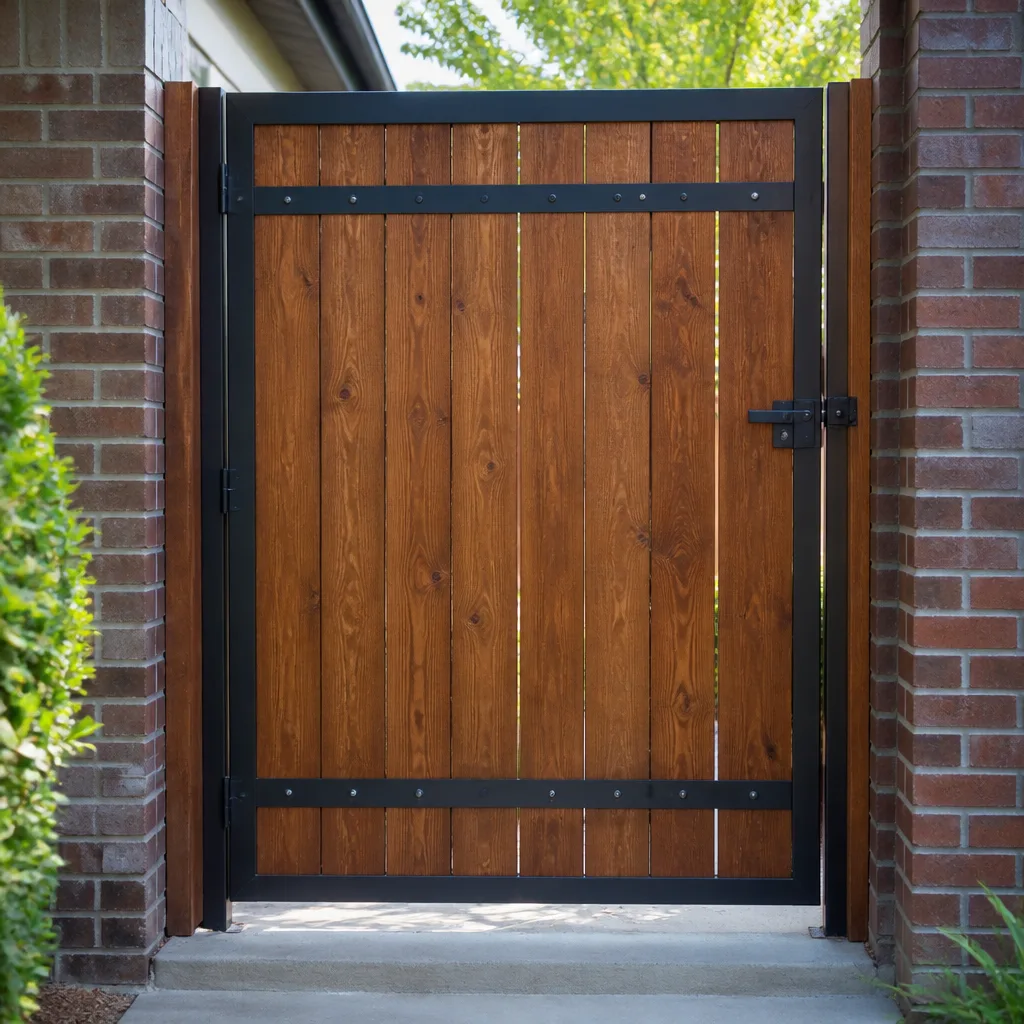 Wood & steel frame
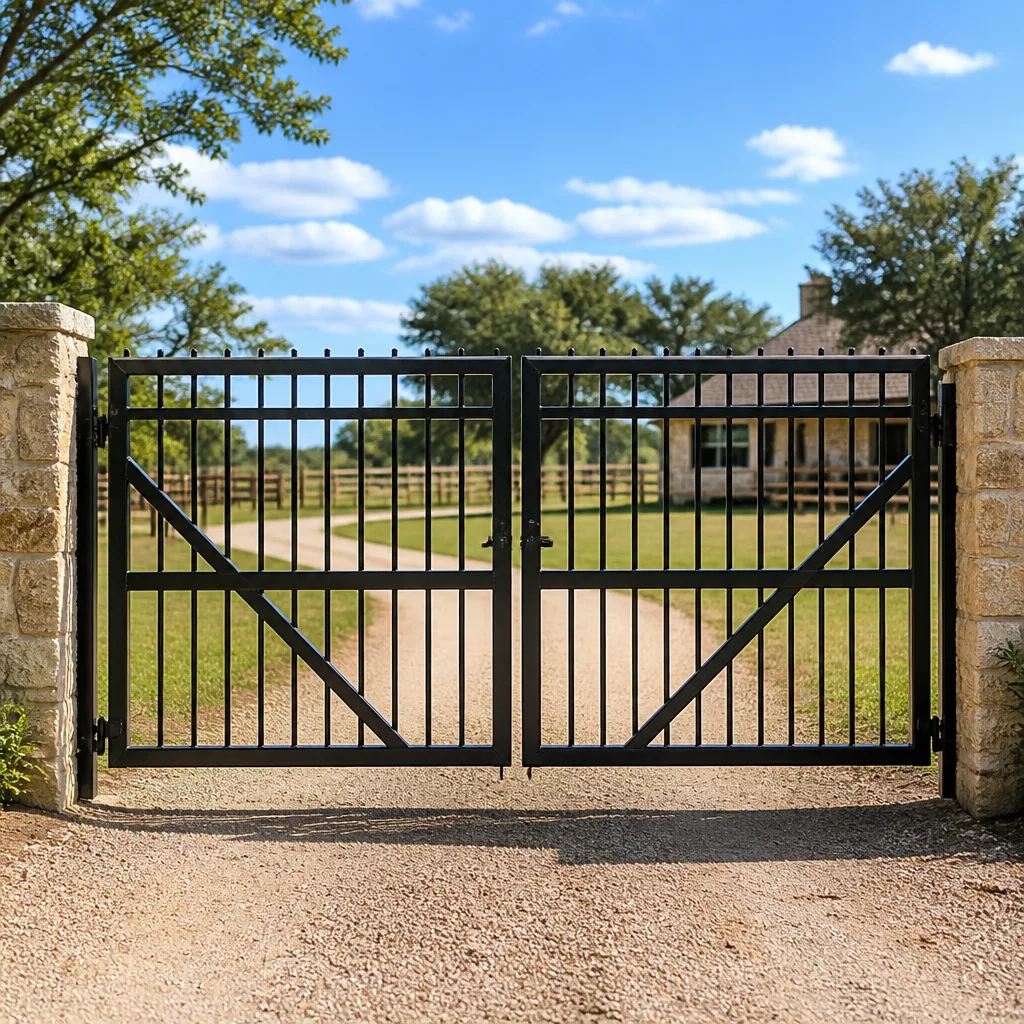 Farm & ranch
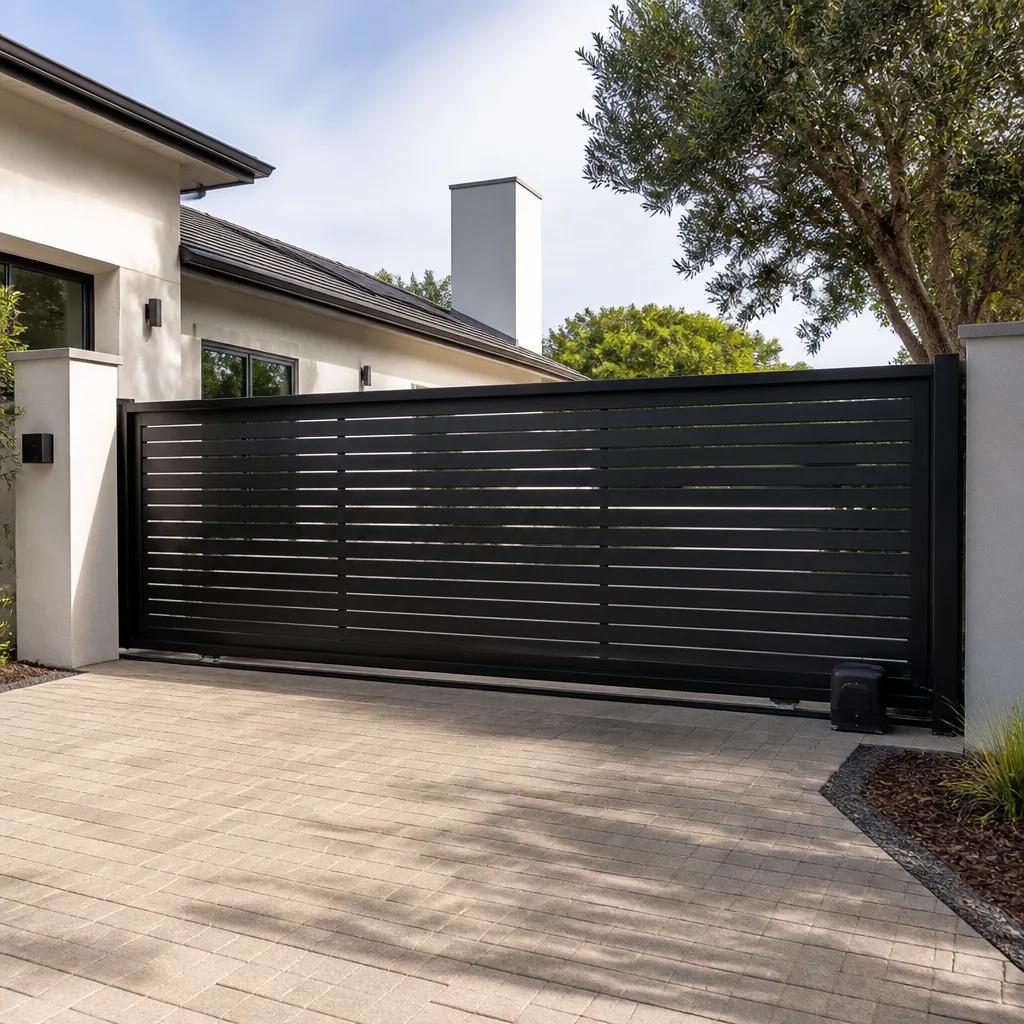 Sliding driveway gates
Free on-site gate assessment - hinges, posts, and your LiftMaster or Nice gate operator checked before anything is quoted
The assessment is free and the quote is the invoice.
Get your free estimateSeasonal Gate Repair Care for Los Angeles: Year-Round Homeowner’s Guide
Most Los Angeles homeowners think of gate maintenance as a reaction to failure. The gate stops opening, so they call someone. But here’s what 17 years of repair records across Los Angeles tell us: the two biggest spikes in emergency gate service calls land in October and February. October follows the first strong Santa Ana winds, which rack fence frames and burn out operator gears that were already struggling. February follows the heart of the rainy season, when wooden gates swell, hinge bolts shift, and control boards corrode. Neither spike gets reported as a seasonal failure, because nobody tracks gates by season. This guide does. You’ll learn what your gate actually experiences month to month in Los Angeles, what to check and when, and which tasks prevent the calls that always seem to come at 9 p.m. on a Sunday. For hands-on help, see our Gate Repair services.
Styles & brands we work with
Quick Answer
Seasonal gate maintenance in Los Angeles means four targeted checkups per year, not twelve monthly projects. Before Santa Ana season, you tighten hardware and test the operator’s force settings. After the rainy season, you inspect for water intrusion and wood swelling. Through summer, you manage heat exposure on electrical components and hydraulic closers. And after any nearby wildfire, you clean ash residue off electrical contacts before corrosion sets in. Each checkup takes under an hour and prevents most emergency repair calls.
Table of Contents
- The Los Angeles Gate Stress Calendar: Four Seasons, Defined Differently
- August – September: Pre-Santa Ana Preparation
- October – November: Santa Ana Wind Survival
- February – March: Post-Rainy Season Recovery
- June – August: Summer Heat and UV Management
- Wildfire Ash and Smoke Residue: Cleaning Gate Components Safely
- The Month-by-Month Single-Task Calendar
- Common Mistakes to Avoid
- When to Call a Professional
- Frequently Asked Questions
- The Bottom Line
The Los Angeles Gate Stress Calendar: Four Seasons, Defined Differently
Los Angeles doesn’t have winter the way Minneapolis does. But every gate in this city still moves through four distinct stress periods, and they don’t line up with the calendar seasons people expect. We’ve repaired enough gates across Los Angeles to map these periods precisely, and once you see the pattern, a lot of confusing failures start to make sense.
Here’s what your gate actually goes through:
- August through September: Dry heat and Santa Ana wind conditions begin. Hardware that has been loosening all year gets exposed. Operators that are already marginal start overheating in sustained 90-plus degree afternoons.
- October through November: Peak Santa Ana wind season. Lateral force against the gate face stresses hinges, welds, and the operator’s internal gears. This is when most mechanical failures surface.
- December through March: Rainy season. Moisture gets into control boards, wood gates swell, and slide gate tracks fill with debris that hardens into cement-like clogs.
- April through July: Temperate recovery and gradual heat buildup. This is the window when proactive maintenance pays off most, because the gate isn’t under acute stress. Work done in May prevents the October call.
The counterintuitive part, in our experience, is that the gate rarely breaks during the season that caused the damage. A hinge that fatigues during Santa Ana winds in October might not snap until December. A control board that got wet in February might run fine until June, then fail when heat expands a corroded trace. By the time the gate stops working, the root cause is weeks or months old. That’s why seasonal maintenance works: you address the stress period before the delayed failure arrives.
If you want a broader look at the repair patterns we see across the city, our Gate Repair in Los Angeles page covers operator failures, hinge replacements, and track realignments in detail.
August – September: Pre-Santa Ana Preparation
Santa Ana winds don’t announce themselves politely. They arrive as a sudden, sustained force out of the northeast, often gusting to 40 or 60 mph in the canyons and foothills. For a gate, that’s not weather. That’s a structural load test. A swing gate that weighs 600 pounds becomes a 600-pound sail. The hinges take the brunt, the operator arm gets yanked beyond its normal travel range, and any bolt that wasn’t tight last month gets worked loose this month.
The window to prepare is August and September, before the first major wind event. Here’s the pre-Santa Ana checklist we use on every seasonal service call in Los Angeles, drawn from The Complete Guide to Gate Repair in Los Angeles:
- Test hinge play. Grab the gate near the latch and lift. Any vertical movement, or a click, means the hinge bolts or hinge bodies are worn. In Santa Ana winds, that play becomes slamming force.
- Tighten all mounting bolts. Hinge bolts, operator bracket bolts, track bolts on slide gates, and post caps. Use a torque wrench if you have one; if not, get them snug. But don’t overtighten into wood that’s already dry from summer.
- Check the operator arm’s connection point. On a swing gate, the arm connects to the gate with a pin or bracket. Wear at that single point is the most common wind-related failure we see. If the hole has elongated, the arm will hammer against the pin in every gust.
- Run a full open-close cycle and listen. A smooth operator is quieter than you think. Grinding, clicking, or a laboring sound in the middle of the travel range means internal gears or the drive belt are already compromised. Wind load will accelerate that damage.
- Clear the gate path and track. Anything within 3 feet of the gate’s arc on a swing gate, or inside the track channel on a slide gate, becomes a projectile or a jam point when wind pushes the gate off-line.
What surprises many homeowners is how little force it takes to reveal a problem. A gate that works fine on a calm day can fail in a single gust because a hinge that’s 90% fine is still 10% worn, and the wind finds that 10% immediately. The pre-Santa Ana checkup is specifically about finding that 10% before October does.
October – November: Santa Ana Wind Survival
By the time the first red flag warning hits, the preparation window has closed. Once sustained wind is pushing against the gate, the only thing you can do is monitor and respond. But there are still two or three things worth knowing that most Los Angeles homeowners never hear.
First, if your gate is a slide gate, wind doesn’t hit it the way most people assume. A slide gate moves parallel to the fence line, so a direct headwind or tailwind is less of an issue. The problem is crosswind, which pushes the gate against the track rollers. That’s why slide gates in the San Fernando Valley, where Santa Ana winds funnel through the passes, fail at the roller bearings more often than gates in West Los Angeles, where the wind tends to be less sustained. If you hear a metallic scraping during a wind event, that’s the gate face dragging against a roller or the track. Mark the sound in your memory. If it’s still there after the wind dies down, the roller assembly needs replacement.
Second, during a wind event, don’t leave the gate in a partially open position. A half-open swing gate is a lever arm and the hinge joint is the fulcrum. Every gust multiplies the force at the hinge. If the gate has to stay open for a delivery or a contractor, open it fully and mechanically secure it. We’ve seen partially open gates rip hinge bolts out of brick columns that were otherwise perfectly sound.
Third, know what your operator’s force sensitivity is doing. Most modern operators, including the LiftMaster and FAAC units we service regularly, have adjustable force settings. When wind regularly pushes against the gate, the operator has to work harder to overcome that resistance. If the force setting is too high, the operator will push through the obstruction instead of stopping, which is how gates bend their own metal. If it’s too low, the gate will stop midway and the operator will fault out. During Santa Ana season, the sweet spot matters more than any other time of year. If your gate reverses or stops for no apparent reason during a wind event, the force setting needs an adjustment, not a replacement motor.
For a deeper look at how operators behave under load, see our Electric Gate Repair in Los Angeles page, where we cover motor windings, control boards, and force calibration in detail.
February – March: Post-Rainy Season Recovery
Rain in Los Angeles comes in bursts, and the damage it does to gates comes in two forms: immediate and delayed. The immediate damage is rust and corrosion on exposed metal. The delayed damage is what moisture does inside enclosures, inside wooden gate panels, and inside control boards, where it sits for weeks before the failure shows up.
The post-rainy season inspection covers four specific areas:
- The operator control board enclosure. Every operator has a housing that’s supposed to be weather-resistant, not weatherproof. Driven rain, especially in foothill communities, finds its way in through grommets and lid seams. Once water is inside, it condenses on the board and corrodes solder joints and connectors. Signs to look for: white or green residue on the board, a musty smell when you open the housing, or condensation on the inside of the lid. If you see any of that, the board should be inspected by someone who knows the specific brand, because corrosion that looks cosmetic can arc and fail in June.
- Wooden gate swelling. A wooden gate that fit its opening perfectly in September can swell enough by February to bind against the post or the latch. That binding doesn’t just make the gate hard to open by hand. It forces the operator to work harder on every cycle, which shortens motor life. If your wooden gate scrapes or sticks after rain, the fix might be as simple as planing an edge or adjusting the hinge spacing, but it needs to be addressed before the operator takes the punishment.
- Slide gate track debris. Rain washes silt, leaves, and small stones into the track channel, and when the sun dries it out, it hardens into a packed crust. The gate’s rollers then have to climb over or crush through it, which accelerates roller wear and strains the drive chain. February is the right time to clear the track by hand and run the gate through a full cycle to check for drag.
- Electrical connections at the keypad, intercom, and safety devices. Water follows wires. If moisture got into any above-ground junction box, you’ll see corrosion at the terminals. The symptom is usually a keypad that works intermittently or a safety edge that faults out. These connections need to be cleaned and resealed before the corrosion travels up the wire.
The rainy season is also when we see the most failed gate operators that were installed without proper drip loops. A drip loop is just a downward loop in the wiring before it enters the operator housing, so water runs off the lowest point instead of following the wire inside. It’s a two-dollar detail on install day and a four-hundred-dollar control board replacement in March if it was skipped. If you’re having a new operator installed, ask about the drip loop. Gate Installation in Los Angeles is exactly the kind of work where that detail matters most.
June – August: Summer Heat and UV Management
Los Angeles summers don’t just heat the air. They heat the gate itself. A powder-coated steel gate in full sun can reach 160 degrees on the surface, and the operator housing can get hotter than that inside. That sustained heat does three things to gate systems that mild climates never experience.
First, hydraulic gate closers lose effectiveness in heat. Hydraulic fluid thins as temperature rises. If you have a hydraulic closer on a pedestrian gate or a driveway gate, you might notice the gate slams faster in summer than it did in spring. The closer’s internal seals also degrade faster in sustained heat, which leads to leaks and a gate that stops closing fully. A closer that gets mushy or leaks needs replacement, not adjustment.
Second, battery backup units inside operators fail earlier in hot climates. Most backup batteries are sealed lead-acid or lithium, and both chemistries age faster as ambient temperature rises. A battery that would last five years in San Francisco might last three in the San Fernando Valley. If your operator has a battery backup and the battery is more than three years old, summer is the time to have it load-tested. A battery that tests fine in April might not survive August.
Third, powder-coat adhesion breaks down under UV exposure. The coating doesn’t peel because it’s low quality; it peels because UV radiation at this latitude breaks down the polymer binder. Once the coating micro-cracks, moisture from morning marine layer fog gets underneath and rust starts. You’ll see it first on the top edge of the gate and on horizontal surfaces that face the sky. Touch-up paint on those edges each year extends the gate’s life by years, and it’s a five-minute job.
Heat also affects operator gearboxes. The grease inside most residential operators is rated for a temperature range, and sustained heat thins it to the point where it migrates away from the gear teeth. A gearbox that sounds noisy in August and quiet in December is running under-lubricated all summer. That’s a service item worth handling before the gears wear to the point of replacement.
BFT and Mighty Mule operators, which we service regularly, both have specific temperature-related service intervals for their gear assemblies. If you know your operator brand, the manual will tell you when to inspect and regrease. If you don’t know your operator brand, now’s the time to find out, because that single fact determines most of the maintenance schedule.
Wildfire Ash and Smoke Residue: Cleaning Gate Components Safely
Wildfire ash is not ordinary dust. It’s alkaline, it’s abrasive, and when it gets wet, it forms a corrosive slurry that eats through electrical connections and painted surfaces faster than anything else in the Los Angeles environment. After a nearby fire event, even if your property was never directly threatened, your gate needs cleaning. Here’s how to do it without making things worse.
The rule is: never hose down an operator or a keypad. Water pushes ash into the housing and creates exactly the corrosive environment you’re trying to remove. Instead:
- Blow off the loose ash first. Use a leaf blower or compressed air at low pressure, working from the top of the gate down and away from the operator housing. Keep the airstream at an angle so you’re not forcing particles under seals and grommets.
- Wipe down non-electrical surfaces with a damp cloth. Dry-wipe first, then use a cloth barely dampened with water and a mild detergent, then wipe dry. On painted surfaces, the goal is to remove the alkaline ash before it etches the paint.
- Clean electrical connections with contact cleaner, not water. Keypads, intercom panels, and safety edge connections should be dry-wiped, then treated with an electronics-safe contact cleaner if corrosion is already starting. If you see white crust forming on terminals, that’s the ash reacting with moisture. It needs to be cleaned by someone who can take the housing apart without voiding the warranty.
- Inspect the operator’s ventilation openings. Many operators have small vents or louvers to allow heat to escape. Ash will find its way in through those openings. If you can see ash buildup inside the housing through the vents, the unit should be opened and cleaned internally. Don’t attempt this yourself on a unit with exposed capacitors.
After a significant fire event within a few miles of your home, the smoke alone can leave a film on circuit boards that becomes conductive when humidity rises. We’ve replaced control boards in Los Angeles neighborhoods that were never evacuated but were downwind of a fire for three days. The boards looked fine on the outside and failed on the inside. If your operator starts misbehaving in the weeks after a fire event, don’t assume it’s a coincidence.
The Month-by-Month Single-Task Calendar
For more guides & resources, visit our blog. Here’s the entire year reduced to one task per month. You’ll notice some months have a single check, not a project. That’s intentional. The point is to keep the gate in the back of your mind without making it a burden. If you do the August and November tasks, you’ve prevented the October and February emergency calls. If you do all twelve, you’ll probably never make an emergency call at all.
- January: Watch for gate behavior during and after rain. Note any sticking, scraping, or slow operation.
- February: Clear slide gate tracks of debris and check for moisture inside the operator housing.
- March: Test the auto-reverse and safety edges by blocking the gate during a closing cycle.
- April: Lubricate hinges and roller bearings with a dry lubricant suitable for exterior use.
- May: Schedule any professional service or tune-up while the gate is not under stress.
- June: Check the hydraulic closer and battery backup for heat-related issues.
- July: Touch up any exposed metal or peeling powder coat on the gate face and top edges.
- August: Complete the full pre-Santa Ana checklist detailed above.
- September: Test operator force settings and listen for gear noise during a full cycle.
- October: Listen for scraping during wind events and note any gate faults.
- November: Post-wind inspection: check hinges, brackets, and the operator arm connection point.
- December: Test the keypad, intercom, and all remote controls. Replace remote batteries.
That’s the whole year. Each task is under 15 minutes except the August checklist, which takes about an hour. The process matters less than the habit: a gate that gets looked at once a month develops fewer surprises than a gate that gets ignored until it fails.
Common Mistakes to Avoid
- Lubricating the operator’s internal gears with WD-40. WD-40 is a solvent and a water displacer, not a gear lubricant. It washes away the grease that’s supposed to be there. Use the lubricant specified in your operator’s manual, or a lithium-based grease for metal gears.
- Ignoring a gate that still technically works. A gate that closes slowly, scrapes, or reverses intermittently is a gate that’s telling you something. Waiting for total failure turns a hinge adjustment into a motor replacement.
- Pressure-washing the gate before a fire inspection. High-pressure water forces ash and debris into seals, bearings, and electrical housings. Low-pressure washing is fine for the gate face; keep the operator and control panel dry.
- Tightening a binding wooden gate by adjusting the hinges. A gate that swells and binds in winter will shrink back in summer. Adjusting hinges during the swollen period means the gate will sag when the wood dries. Address the swelling first, then adjust if needed.
- Replacing the operator without addressing the gate itself. If the gate is out of balance, misaligned, or dragging in its track, a new operator will fail early for the same reason the old one did. The operator and the gate are one system.
- Assuming a post looks fine from the outside. A post that’s rotting at ground level, or a metal post that’s rusting at the weld joint, can look intact from five feet away. Get down and look at the base of the post, especially after rain.
When to Call a Professional
Most of the maintenance in this guide is within reach for a homeowner who owns a socket set and a willingness to listen. But some situations need a professional, and trying to fix them yourself usually makes the repair more expensive. Call if your gate sparks, smokes, or trips a breaker. Call if the operator smells burnt, even once. Call if you open the operator housing and find standing water or significant corrosion. Call if the gate post is visibly leaning, or if the gate has started dragging on the ground. And call if your auto-reverse or safety devices stop working, because a gate that doesn’t reverse is genuinely dangerous. Portcullis Gate Repair Los Angeles home responds to all of these situations, and we offer free estimates throughout Los Angeles. Call (213) 322-0062 and we’ll show up with a written price before any work begins.
Frequently Asked Questions
Lubricate hinges and roller bearings every three months, and more frequently during the dry summer months when dust accumulates and acts as an abrasive. Use a dry lubricant or a lithium-based grease, not WD-40. After lubricating, run the gate through a full cycle to distribute the lubricant evenly. If you hear grinding after lubricating, call (213) 322-0062 for an exact diagnosis.
A gate that sticks after rain in Los Angeles is usually a wooden gate that has absorbed moisture and swollen, or a slide gate track that has filled with rain-washed debris. Wooden gates bind against the post or latch, and slide gates drag through packed silt. Both issues put extra strain on the operator and should be addressed within a few weeks of the rain. Call us for a free estimate if the sticking persists.
A seasonal gate tune-up in Los Angeles typically runs $150 to $300, depending on the gate type, operator brand, and what’s found during the inspection. Hinge replacements run $75 to $150 per hinge, roller assemblies $60 to $120 each, and a new control board $350 to $750 parts and labor. Most swing-gate actuator swaps run $450 to $900 all-in. Every job gets a written price before work starts.
Yes. We answer the phone with a live person 24/7, and wind-related gate failures are one of the most common emergency calls we handle in Los Angeles. The technician will diagnose the problem, give you a written price, and complete most repairs in a single visit. Call (213) 322-0062 and we’ll give you a real arrival window.
Most residential gate operators in Los Angeles last 8 to 12 years with regular maintenance, and 4 to 7 years without it. Heat, ash, and Santa Ana wind load shorten operator life significantly compared to coastal climates. LiftMaster, FAAC, and BFT units we service regularly all respond well to annual force-setting checks and gear lubrication. If your operator is past year 10 and getting noisy, it’s time to start planning a replacement.
Yes. Every Portcullis Gate Repair job includes the Kingswell Guarantee in writing: a written price before the work starts, a real arrival window, a clean job site, and a written guarantee on the repair. If the repair fails within 365 days, we come back and fix it at no charge. That’s the 365-Day Done Right Promise, and it’s stamped on every invoice. Call (213) 322-0062 for any repair covered by the guarantee.
The Bottom Line
Los Angeles gates don’t fail randomly. They fail on a schedule that follows the city’s actual weather patterns: Santa Ana winds in October, rain in February, heat in August, and ash after wildfire season. If you know the schedule, you can work ahead of it. The pre-Santa Ana checklist in August prevents the October emergency call. The post-rain inspection in February prevents the June control board failure. The monthly single-task calendar keeps the whole system manageable. And when something does fail, the fix should carry a written guarantee from a Kingswell company that has served Los Angeles since 2008. Your gate should open when you want it to open. Maintenance is how you make sure it does.
Written by Dean Prescott, Owner at Portcullis Gate Repair Los Angeles, serving Los Angeles since 2008.
See the difference
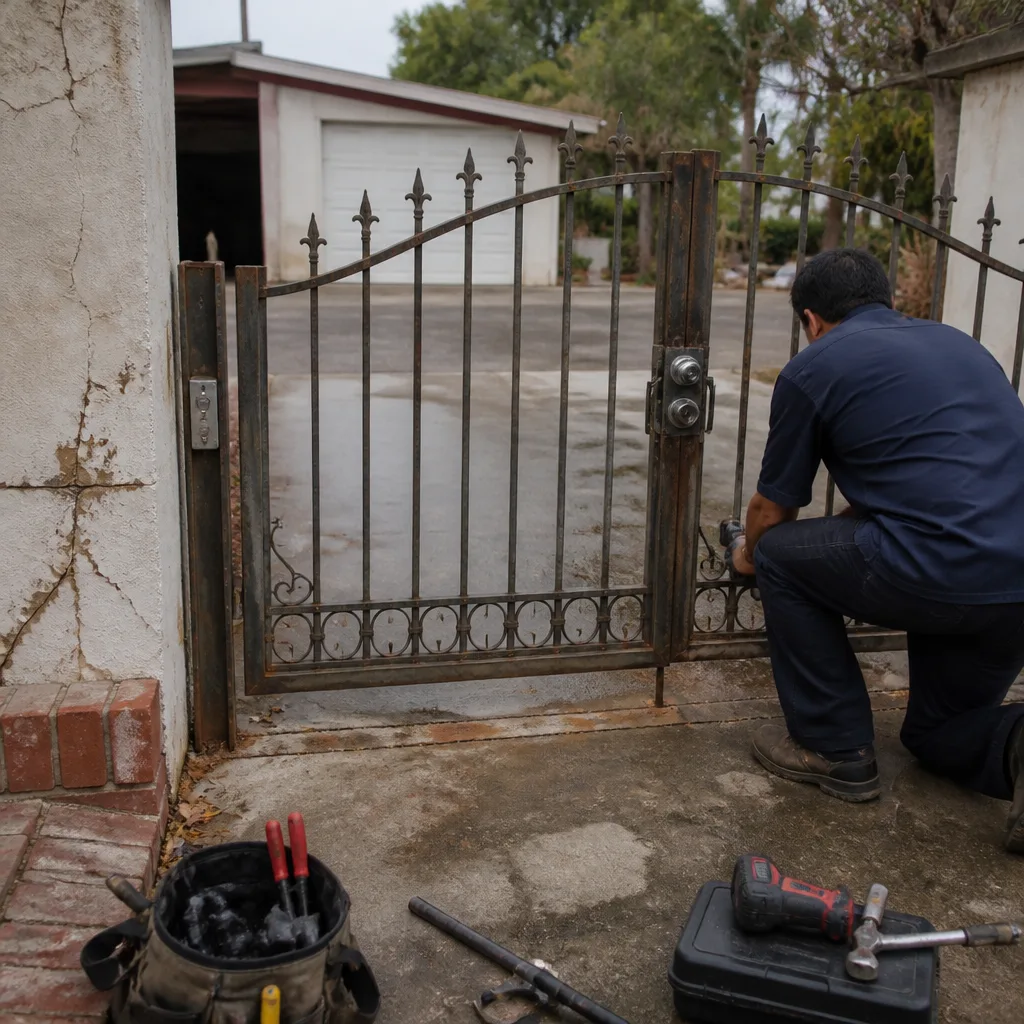 Before
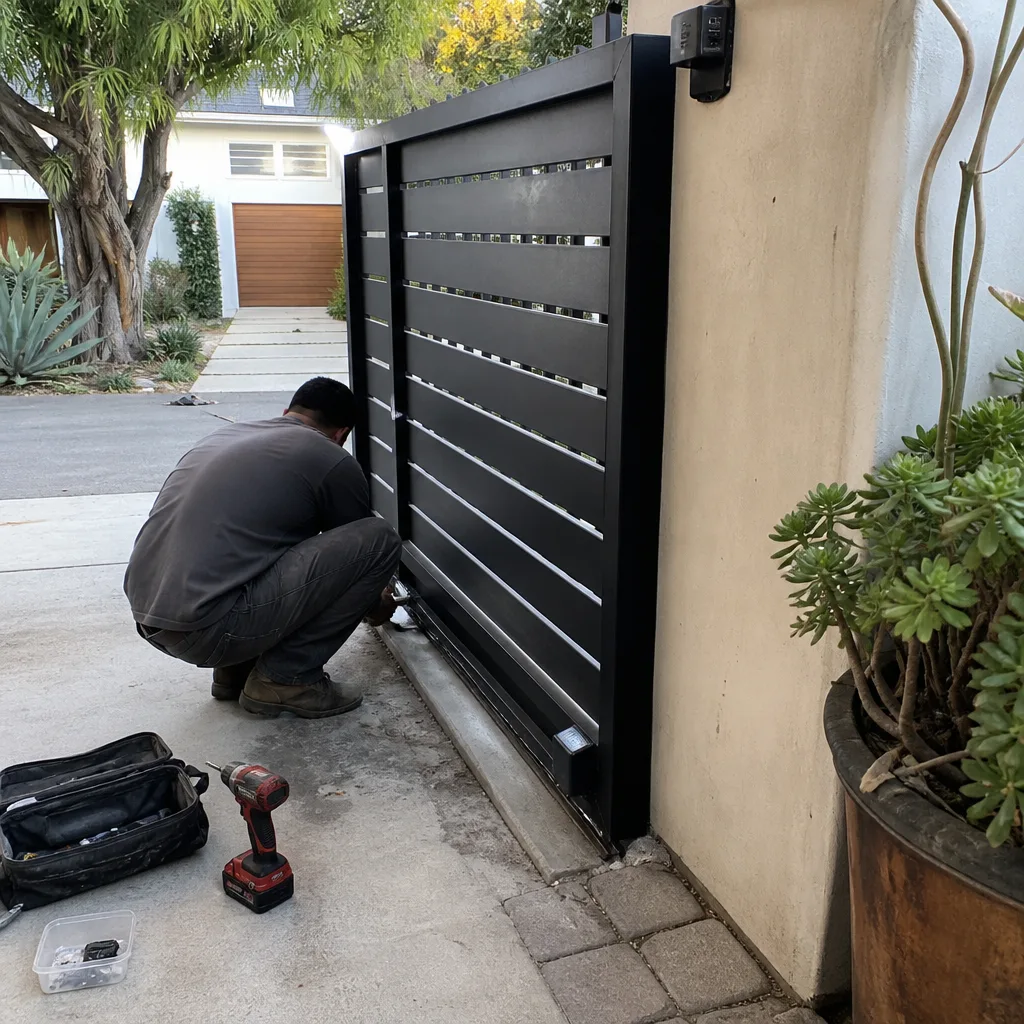
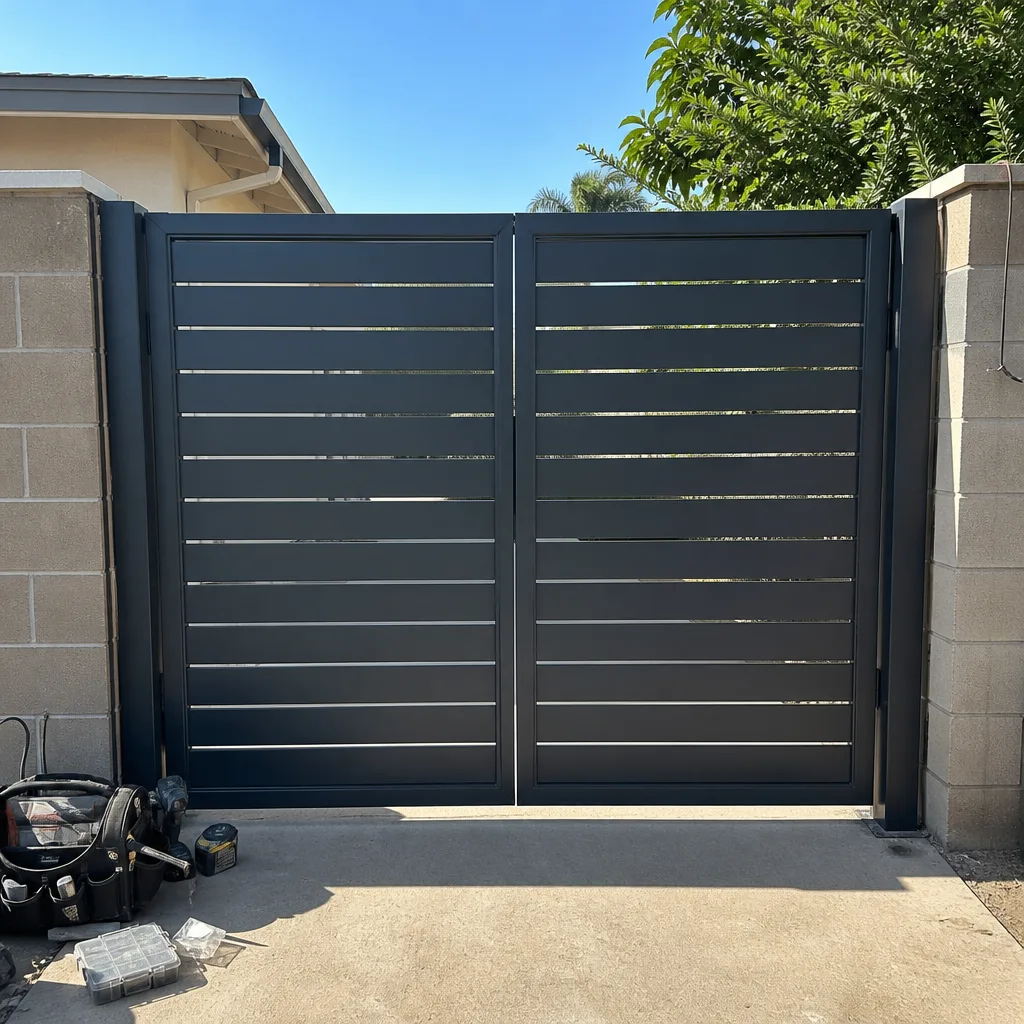 After
After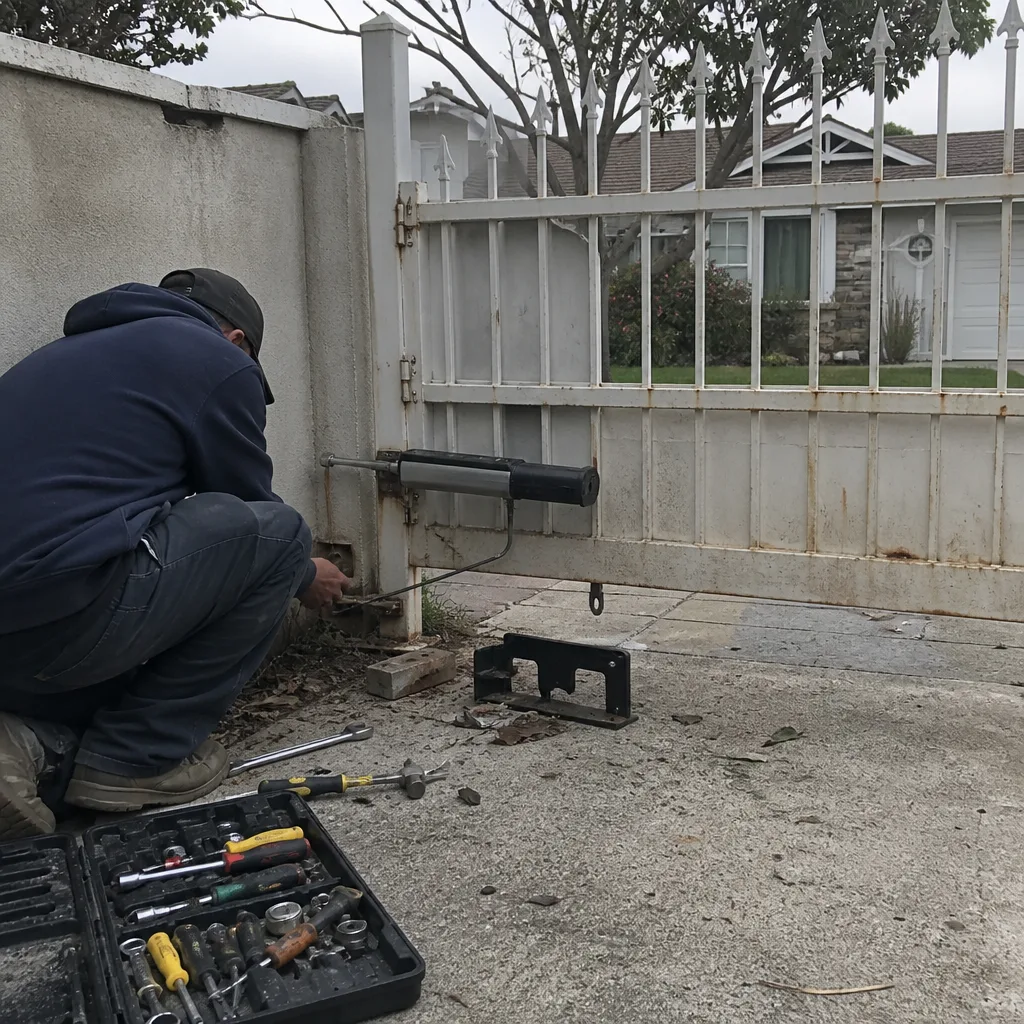 Before
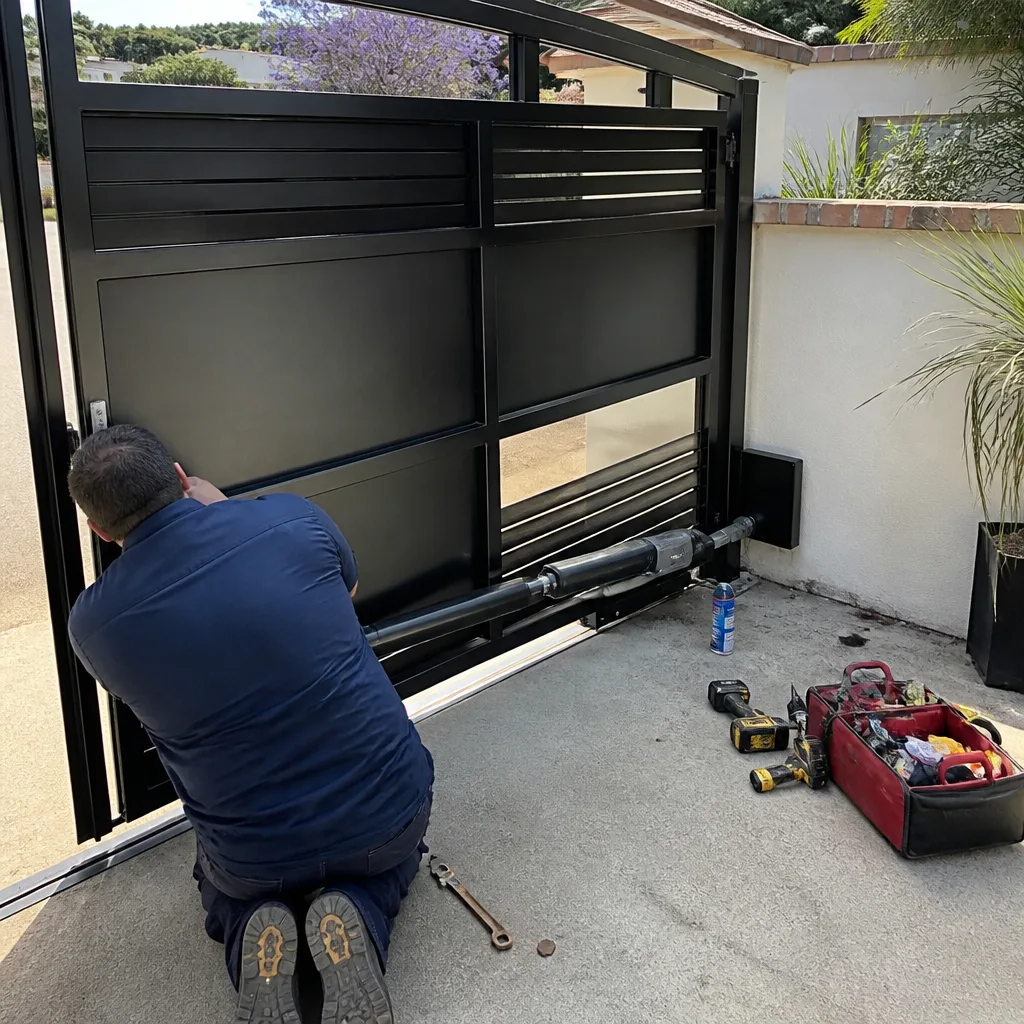 After
After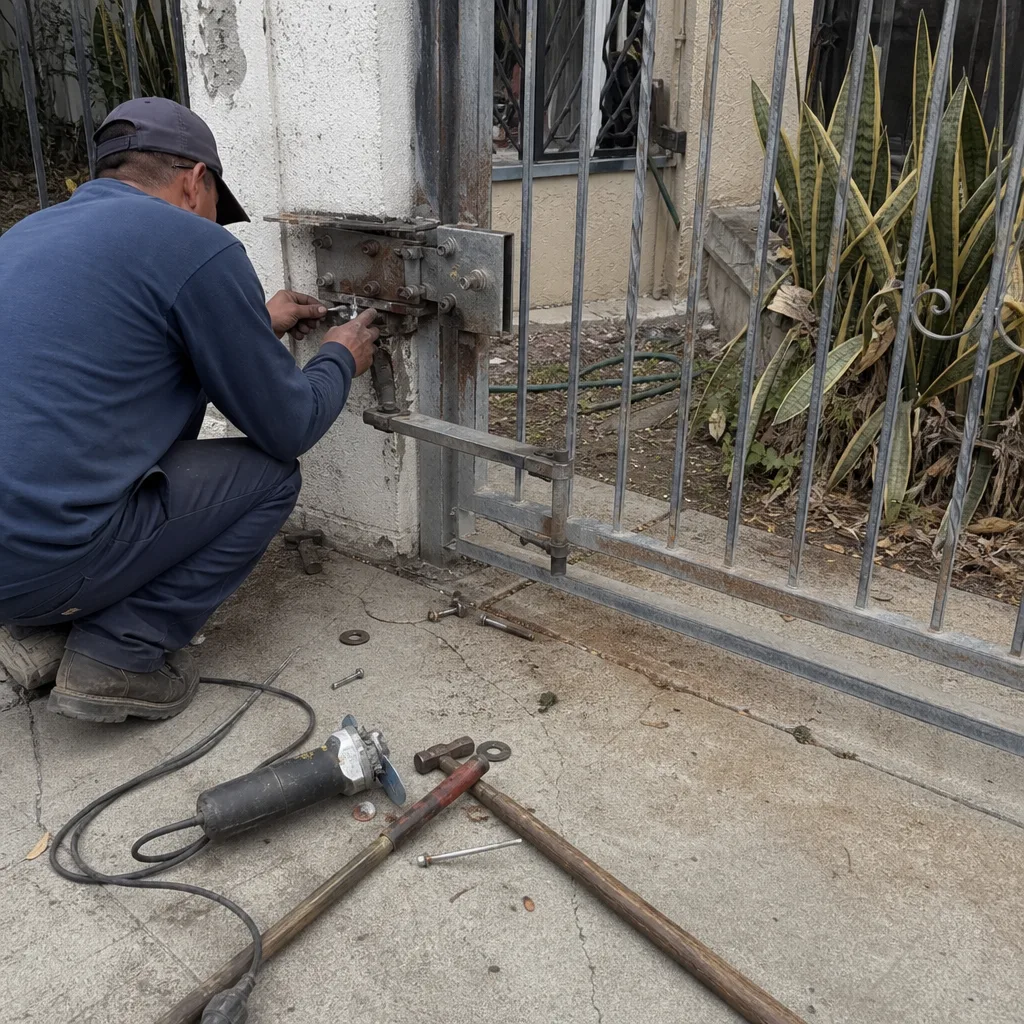 Before
 After
After