
Last updated October 16, 2026
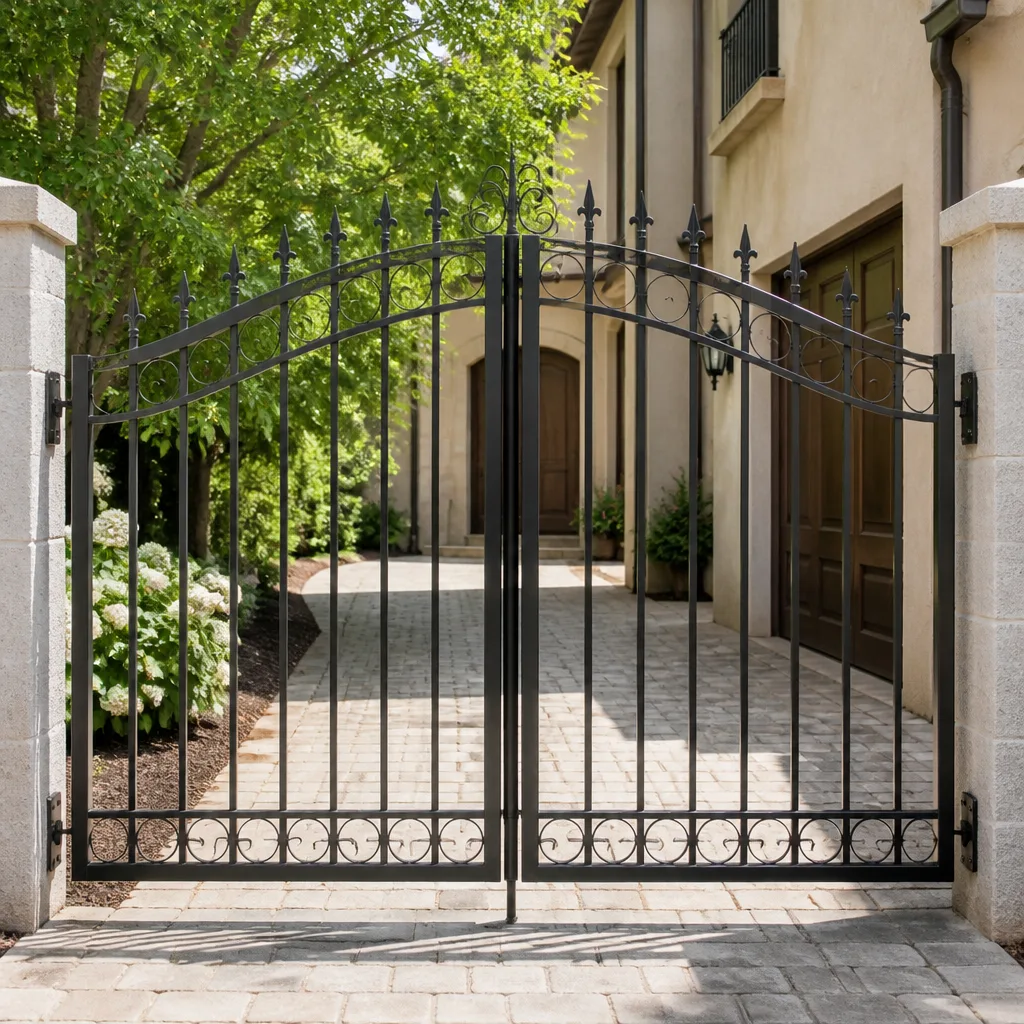 Wrought iron
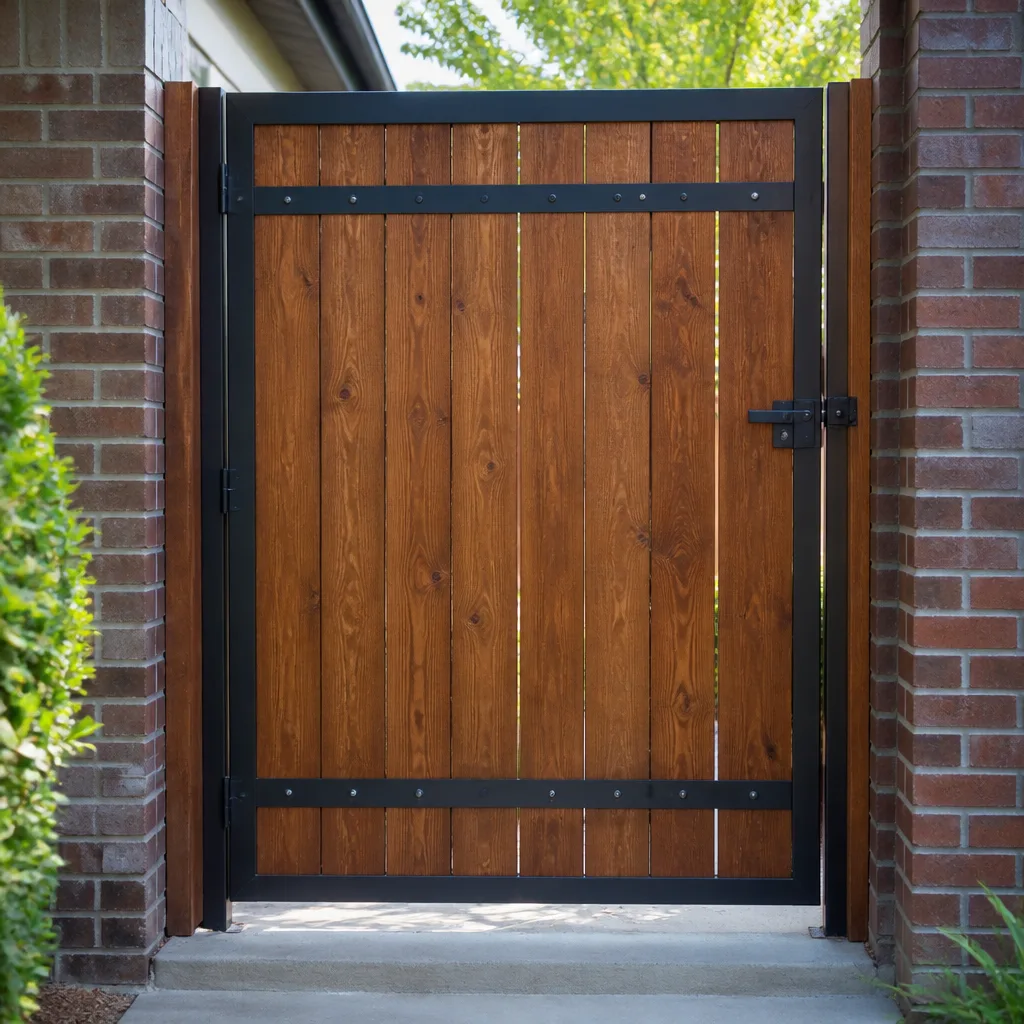 Wood & steel frame
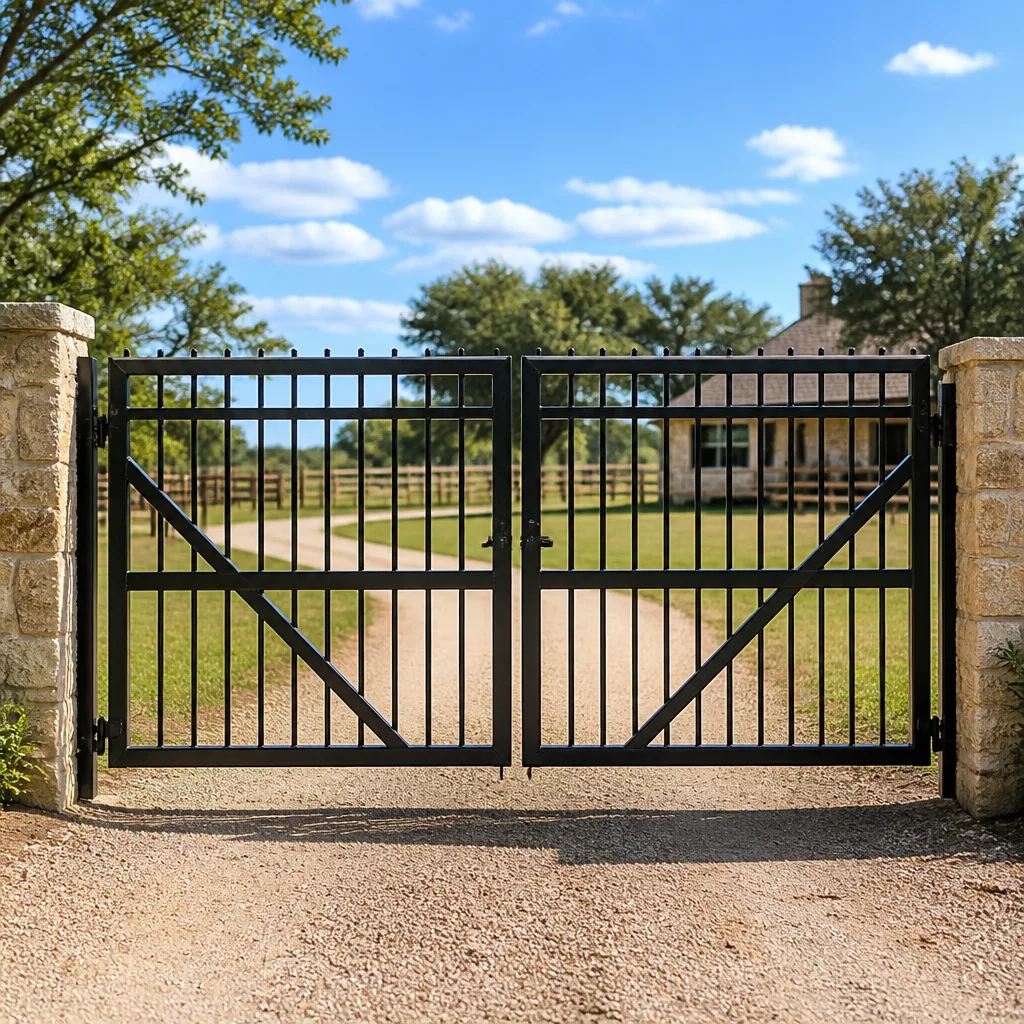 Farm & ranch
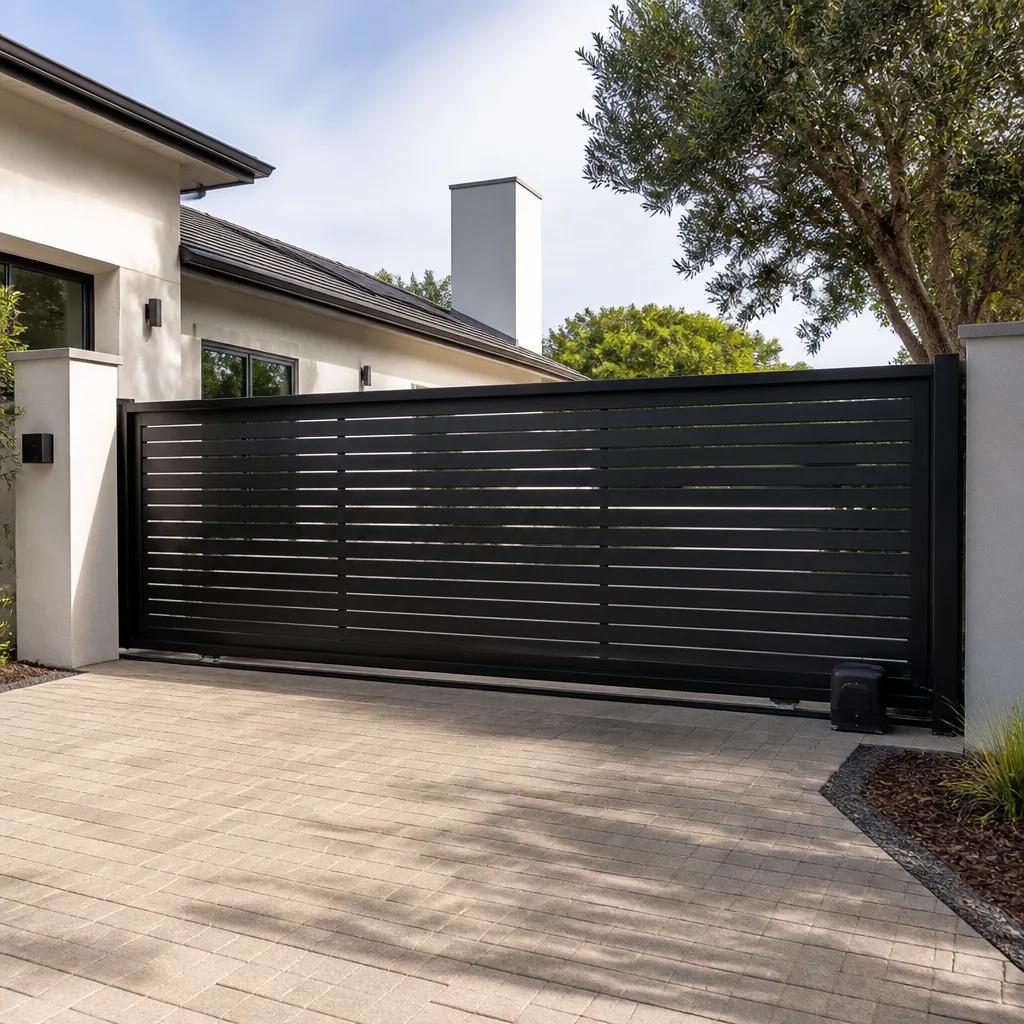 Sliding driveway gates
Free on-site gate assessment - hinges, posts, and your LiftMaster or Nice gate operator checked before anything is quoted
The assessment is free and the quote is the invoice.
Get your free estimateDIY vs Professional Gate Repair: The Los Angeles Homeowner’s Decision Guide
Here’s something most more guides & resources won’t tell you: the most expensive repair we perform in Los Angeles isn’t the broken operator or the snapped hinge. It’s the aftermath of a well-intentioned DIY attempt that went wrong on a Saturday afternoon. We’ve walked onto properties in Sherman Oaks and Pasadena where a homeowner saved $150 on a limit switch adjustment, only to pay $800 three weeks later when the misadjusted switch allowed the gate to slam into its end stop and crack the rack gear. This guide sorts every common gate repair in Los Angeles into three honest categories: safe to DIY, DIY with caution, and call a professional every time. You’ll learn which tasks a competent homeowner can handle, which ones carry hidden liability, and how to use a professional service call strategically so you never pay for a job you could have done yourself.
Quick Answer
Safe DIY gate tasks in Los Angeles include lubricating hinges and rollers, replacing remote batteries, and touching up minor rust or wood damage. Tasks requiring caution include hinge tightening and basic track cleaning. Anything involving the operator motor, control board wiring, entrapment sensors, post re-setting, or spring tension should go to a licensed professional every time, because California’s UL-325 compliance standard places legal liability on whoever last adjusted the gate’s safety systems. Expect to spend $30 to $80 on DIY maintenance supplies per year, versus $180 to $340 for a typical Gate Repair visit in Los Angeles.
Styles & brands we work with
Table of Contents
- The Three Categories: How to Sort Every Gate Repair
- Safe DIY: Tasks Any Los Angeles Homeowner Can Handle
- DIY With Caution: The Middle Zone
- Professional Only: What Never to Touch Yourself
- The California Liability Question No One Talks About
- The Hidden Cost of a Failed DIY Attempt
- How to Use a Pro Visit Strategically
- Common Mistakes to Avoid
- When to Call a Professional
- Frequently Asked Questions
The Three Categories: How to Sort Every Gate Repair
Before you pick up a wrench, you need to know which bucket your repair falls into. We sort every gate issue we encounter in Los Angeles into three categories based on two questions: what happens if I get this wrong, and who is legally responsible if someone gets hurt. A gate is not like a garbage disposal or a ceiling fan. It’s a heavy moving object, often motorized, frequently on a public-facing boundary, and regulated by the state of California under UL-325. The failure mode of a bad hinge repair is annoying. The failure mode of a bad sensor adjustment is potentially catastrophic, and legally yours.
- Category 1: Safe DIY. The failure mode is forgiving. You make a mistake, the gate still works, maybe it squeaks. No safety risk, no code issue, no liability exposure. Cost to fix your mistake: zero to $40.
- Category 2: DIY with caution. The failure mode is moderately risky. A mistake can cause secondary damage or shorten the life of a component. You need the right tools and a willingness to learn. Call a pro if the task is outside your comfort level.
- Category 3: Professional only. The failure mode is dangerous or legally serious. A mistake can injure someone, create a code violation, or void a warranty. These tasks require specific training, calibrated tools, and insurance. In Los Angeles, they also carry legal liability under California law.
The rest of this guide walks through each category with specific tasks, real price references, and the Los Angeles-specific factors that change the equation. We’ve been doing this work since 2008, and we’ve seen every outcome there is to see.
Safe DIY: Tasks Any Los Angeles Homeowner Can Handle
These are the maintenance and minor repair tasks that a competent homeowner can do with basic tools and about an hour of time. The failure mode is forgiving: worst case, you need to redo the task. You won’t hurt the gate, yourself, or anyone else. And in Los Angeles, where coastal air in Venice and Santa Monica accelerates rust and inland heat in the Valley dries out lubricant, these tasks need doing more often than most homeowners realize.
1. Lubricating Hinges, Rollers, and Tracks
Every metal gate in Los Angeles needs lubrication two to four times per year, depending on proximity to the coast. Salt air near the Palisades and Santa Monica eats through protective films fast. The task is simple: apply a silicone-based lubricant (not WD-40, which is a solvent that strips existing lubricant) to hinge pins, roller bearings, and the track on slide gates. Use a clean rag to wipe away old grease first. You’ll need a can of silicone spray ($12-$18 at any LA hardware store), a rag, and 20 minutes. The result: a quieter gate, less wear on the motor, and fewer future repair bills. This is the highest-value DIY task per dollar in the entire gate universe.
2. Replacing Remote Batteries
If your gate opener remote is sluggish, works only from close range, or requires multiple presses, you probably need a new battery, not a new remote. Most gate remotes use CR2032 or A23 12V batteries, available at any drugstore for $3 to $6. Pop the case with a small flathead screwdriver, note the battery orientation, swap it, and test. A new remote, by contrast, costs $60 to $120 programmed by a professional. Replacing the battery yourself is a five-minute job with zero risk.
3. Minor Wood and Metal Surface Repair
LA’s dry summers and rainy winters do a number on wooden gates. Small cracks, peeling paint, and surface rust are all safe DIY territory. For wood gates, sand the damaged area, apply exterior wood filler, sand again, and repaint with an exterior-grade paint matched to the existing color. For metal gates, sand down surface rust, apply a rust-inhibiting primer, then a metal paint. You’ll spend $25 to $50 on materials and an afternoon. The key: address surface issues before they become structural. A rust patch the size of a quarter is a $40 weekend fix. A rust-eaten hinge post is a $400 professional replacement.
4. Cleaning Photoelectric Sensor Lenses
Most automatic gates have photoelectric sensors, small paired units on either side of the gate opening that detect anything in the gate’s path. In Los Angeles, dust, spider webs, and landscaping debris accumulate on these lenses and trigger phantom reversals. A soft cloth and glass cleaner is the fix. Do not realign or rewire the sensors, just clean the lenses. You’ll know your sensors are dirty if the gate reverses for no visible reason or refuses to close.
5. Checking and Replacing Remote Batteries in Keypads
External keypads also run on batteries, and LA’s temperature swings shorten their life. Most keypads show a low-battery indicator or respond slowly. The fix involves removing the keypad faceplate, replacing the batteries, and reattaching. The programming stays intact during a battery swap. You’ll spend $5 to $10 and ten minutes.
DIY With Caution: The Middle Zone
These tasks are feasible for a homeowner who is comfortable with tools and willing to learn, but they carry a real risk of secondary damage or component stress if done incorrectly. They are not safety-critical in the way that sensor calibration is, but a mistake can turn a simple job into an expensive one. In our experience across Los Angeles from the hills of Silver Lake to the flat grids of the Valley, these are the tasks that most frequently lead to a call to us anyway, because the homeowner discovered mid-task that the project was bigger than expected. If you start these and feel uncertain, stop and call. That’s what we’re here for, and a phone call is free: (213) 322-0062.
1. Hinge Tightening
Tightened hinges are essential for a gate that swings smoothly and doesn’t sag. The task is simple: locate the hinge bolts or lag screws, tighten them with a wrench or socket. The caution comes in two forms. First, over-tightening a hinge on a metal gate can strip the threads or distort the hinge leaf, creating a worse problem than the one you started with. Second, if the hinge is loose because the post is rotting or shifting, tightening the bolt only masks the underlying issue. On LA’s older properties, particularly in neighborhoods with mature trees and shifting clay soil like Los Feliz or Hancock Park, hinge looseness often means post movement, and that’s a professional repair. Tighten, but if the hinge is loose again within a month, call us for a post inspection.
2. Minor Track Cleaning on Slide Gates
Slide gates, common on LA hillside properties where a swing gate would require leveling a driveway, run on a track that accumulates debris. Cleaning the track is straightforward: remove leaves, dirt, and small stones with a broom, hose, and brush. The caution: do not use water near the operator box, and do not bend or move the track while cleaning. If the gate was sliding smoothly and starts binding or jerking after your cleaning, you may have pushed debris deeper into the track or misaligned a roller. This fix, if you can’t resolve it by brushing out the track, is a professional call. Our Gate Repair in Los Angeles technicians see this exact scenario regularly.
3. Inspecting and Replacing Gate Wheels on Light Gates
Some light single-leaf gates, under four feet wide, sit on wheels that can be inspected and replaced by a homeowner. You’ll need a jack, a replacement wheel from a hardware store, and basic mechanical confidence. The caution here is weight and pinch points: even light gates can be 100 pounds or more, and a falling gate can break fingers. If the gate is motorized, disable the operator at the breaker box before working. If the gate is heavy, motorized, or the wheel is integral to a larger assembly, this moves into the professional category.
Professional Only: What Never to Touch Yourself
Now we get to the tasks that we strongly recommend you not touch, regardless of your comfort level with tools or the number of YouTube videos you’ve watched. These tasks involve electrical wiring, spring tension, structural support, or safety system calibration. They carry the risk of personal injury, property damage, and legal liability. In Los Angeles, they also intersect with California building codes and, critically, UL-325 compliance standards. If you’re not sure which category your repair falls into, start with a call to us at (213) 322-0062 and we’ll tell you over the phone, for free. That’s part of the Portcullis Gate Repair Los Angeles home promise: a live person on the phone, 24 hours a day.
1. Replacing or Repairing a Gate Operator (Motor)
The operator, or actuator, is the motorized arm or box that physically moves your gate. In Los Angeles, we service nine major operator brands including LiftMaster, FAAC, BFT, and Linear, and these units are not user-serviceable. They contain high-voltage connections, control boards with sensitive electronics, and components that must be installed and configured to manufacturer specifications. A homeowner who opens an operator box and starts probing with a voltmeter is risking a short that can destroy the control board, a capacitor discharge that can deliver a serious shock, and a misinstallation that voids the warranty. Operator replacement requires specific training, calibration, and often a second person for safe positioning. The professional service call for operator work typically runs between $350 and $800 in Los Angeles, depending on the unit and the complexity of the installation. That’s a wide range, but we quote every job in writing before we touch a bolt, so you know the exact number before work starts.
2. Calibrating or Replacing Entrapment Sensors
Entrapment protection is the system of photoelectric sensors and force-sensitivity adjustments that prevents a gate from closing on a person, pet, or vehicle. California is explicit about this: under UL-325, the entity that last adjusted or installed the entrapment protection system carries liability for its function. If you adjust the force sensitivity on your FAAC operator and the gate later closes on a child, the legal question is not whether you are a good person, but whether your adjustment met the manufacturer’s calibration specifications. You cannot answer that question without the proper testing equipment and documentation. This is the single most important task on this list to leave to a professional. We calibrate entrapment sensors as part of our standard service, and we document the calibration in writing, which is exactly what you want if a claim ever arises. Our Electric Gate Repair in Los Angeles team handles this work every day.
3. Re-Setting or Replacing Gate Posts
Not all concrete work is structural masonry. We see DIY post repairs in the Valley where a homeowner pours a new concrete base, sets the post, and calls it done. Three weeks later the gate sags because the post was not plumb, the concrete was not the right mix, or the original footing failed and wasn’t diagnosed. Post re-setting requires a jackhammer or auger, proper concrete specs, perfect plumb and square alignment, and a cure time before the gate can be rehung. A proper post re-set in Los Angeles typically runs $400 to $900 per post, depending on the access and the size of the post. The materials are $50. The rest is labor, experience, and liability.
4. Any Electrical Work Inside a Control Board
We don’t need to spend long here. Control boards are not for homeowners. They contain connections that carry line voltage, and the board itself is sensitive to static electricity and improper probing. A single wrong connection can fry a $300 board and require full replacement. If your gate opener is behaving erratically, the problem is likely a communication fault, a relay issue, or a component failure. Diagnosing it requires a meter and the manufacturer’s service manual, plus the experience to interpret what the readings mean. Diagnosing a gate issue is part of our standard service, and the diagnostic is included in the estimate. You can get a full diagnosis for free by calling us at (213) 322-0062 and having a technician out.
5. Replacing Gate Springs (on Self-Closing Gates)
Spring-loaded self-closing hinges and standalone gate springs store a significant amount of energy. A spring under tension that releases suddenly can break fingers or an arm, and on larger gates the energy is substantial. If your self-closing gate slams instead of closes gently, the spring is likely failing or the tension needs adjustment. Leave this to us. The repair is usually under $200, and it’s not worth the risk. Every Portcullis technician is background-checked, uniformed, and trained to handle this work safely.
The California Liability Question No One Talks About
Here’s the reality check that most DIY guides skip, and it’s the single most important reason to be conservative about automatic gate repair in Los Angeles. Gate safety is not a recommendation in California. It’s a legal standard, and the liability chain is real. The UL-325 standard, which California has adopted into its building codes, requires that automated gates be equipped with entrapment protection systems that detect obstructions and reverse course. The standard also requires that installation and maintenance be performed according to the manufacturer’s specifications. What this means in practical terms: if you replace your own operator, or adjust your own sensors, or rewire your own control board, and someone is later injured by that gate, the investigation will look at who last worked on the system. That person is you. And saying “I didn’t know” or “I watched a tutorial” is not a defense; it’s an admission that the work was performed by someone without the qualifications the standard assumes.
This is different from most DIY home repair decisions. If you do a mediocre tile job in your bathroom, the grout cracks and you redo it. If you do a mediocre entrapment sensor calibration, the consequences can be measured in hospital bills, insurance claims, and long legal fights. In our experience, most Los Angeles homeowners have never thought about this until it’s explained. We explain it now because we’d rather you understand the stakes and make an informed decision than learn about it after the fact. This is why we document every calibration and repair in writing on the invoice, with the Kingswell Guarantee attached. When a professional handles the work, the professional carries the liability. That’s one of the things you’re paying for.
The Hidden Cost of a Failed DIY Attempt
The math of DIY gate repair seems simple on the surface: you save the labor cost of a professional visit. In Los Angeles, a typical service call runs $150 to $300 in labor, depending on the work. So if you do it yourself, you pocket that. The math changes when the DIY attempt goes sideways, and it goes sideways often enough that we see the pattern multiple times a month. Here’s how the hidden costs stack up.
The Misadjusted Limit Switch
A limit switch tells the operator when the gate has reached the fully open or fully closed position. It’s a small component, and it looks simple. The DIY temptation is to adjust it when the gate stops short or slams. But a limit switch adjustment on a LiftMaster or BFT operator is a calibration task, not a mechanical one. Set it wrong and the gate slams into the end stop with full motor force, repeatedly. The result: bent gate hardware, a cracked rack gear, or a damaged operator. A limit switch adjustment might cost $180 from a professional. The repair for the secondary damage runs $500 to $800. We’ve seen this in Bel Air, in Encino, in every part of LA.
Incorrect Hinge Torque
Over-tighten a hinge and you strip the threads or distort the leaf. The hinge then needs replacement, which often means cutting the old one off and welding or bolting on a new one. That’s $200 to $400, where the original fix, a proper torque adjustment, would have been $100. Under-tighten a hinge and the gate sags, putting stress on every other component and eventually causing the same replacement. Getting the torque right requires experience, which you’re developing on your own gate at your own risk.
The Board Fry
We mentioned this earlier, but the numbers deserve context. A single probe slip on a control board can send 120 volts through a 5-volt circuit, destroying the board. A replacement board for a Linear or FAAC operator runs $200 to $400 for the part alone, plus $150 to $250 for installation and programming. All because of a $0 repair attempt. When you call us, the diagnostic is included in the estimate, so you know exactly what’s wrong before you commit to anything.
How to Use a Pro Visit Strategically
This is our favorite advice to give Los Angeles homeowners, because it flips the economics of professional service. You don’t have to choose between DIY and paying a professional for everything. You can hire a professional for the critical work and use that visit as a training session for the maintenance you’ll do yourself going forward. Here’s how to do it well.
Step 1: Book a Service Call for the Specific Repair
When you call us at (213) 322-0062, tell us exactly what the gate is doing. The more specific you are, the more useful the visit. “The gate is slow and makes a grinding noise when closing” is a good description. “The gate is broken” is not. We’ll give you a written price for the diagnostic and repair before the technician arrives, and the technician will arrive in the window we commit to. That’s the Kingswell way: written price, real arrival window, clean job site, written guarantee.
Step 2: Watch the Technician Work (Respectfully)
During the visit, don’t hover, but do watch. Ask the technician to explain what they’re doing and why. Our technicians are trained to explain their work in plain language. “I’m adjusting the limit switch so the gate stops before it hits the end stop, which prevents the rack gear from cracking” is the kind of explanation you should expect. You’ll learn the specific vocabulary of your gate system, which makes you smarter about future maintenance decisions.
Step 3: Ask These Three Questions Before the Technician Leaves
- What maintenance should I do myself, and how often? You’ll get a specific answer: lubricate these three points every three months, clean these sensor lenses monthly, replace these batteries yearly.
- What does a problem with this component look like before it fails? Early warning signs are specific. Knowing them means you call us before a small issue becomes a large one, and small issues are cheaper to fix.
- Which tasks on this gate should I never touch? The answer will be specific to your gate, your operator brand, and your installation. Locking in that knowledge saves you from the hidden costs in the next section.
Step 4: Put the Free Training to Work
Now you’re equipped. You know that your FAAC operator’s sensor lenses need monthly cleaning, that your hinge pins need quarterly lubrication with silicone spray, and that any change in gate speed means a call before it gets worse. You’re doing the $30 tasks yourself and paying for the $300 tasks, but no longer the $800 tasks that result from deferred or botched maintenance. If you’re planning a full gate replacement rather than a repair, our Gate Installation in Los Angeles page covers what a full installation includes and what it costs.
Common Mistakes to Avoid
- Using WD-40 on gate hinges or rollers. WD-40 is a solvent and rust dissolver, not a long-term lubricant. It strips existing lubricant and leaves the metal dry. Use silicone spray or white lithium grease instead, available at any Los Angeles hardware store for under $15.
- Adjusting the operator force setting because the gate is occasionally reversing. Phantom reversals are almost always dirty photoelectric sensors or debris on the track, not an operator that needs more force. Increasing the force to “fix” the reversal creates an entrapment hazard and a UL-325 compliance violation. Clean the lenses first.
- Ignoring a gate that seems to work fine but makes a new noise. Gates are quiet when healthy. A new grinding, squealing, or knocking sound is a component telling you it’s failing. Addressing it immediately usually means a $150 repair. Waiting until the gate stops moving usually means a $600 replacement.
- Tightening a hinge to fix a sagging gate without checking the post. In Los Angeles’s expansive clay soils, particularly in hillside neighborhoods, hinges loosen because posts move. Tightening treats the symptom, not the cause. If the hinge loosens again within weeks, the post is the issue and needs professional attention.
- Replacing a remote that just needs a battery. If the remote has been working for more than a year and becomes sluggish, try the $4 battery before the $100 remote. This is the most common unnecessary expense we see, and we see it weekly.
- Attempting a slide-gate repair without disconnecting power at the breaker. Slide gate systems carry live voltage at the operator, and the gate itself can be moved by motor force while you’re working on it. Always cut power at the breaker and lock out the operator before working on a slide gate.
- Assuming a gate repair is like a garage door repair. They share some concepts, but gate systems are exposed to weather, subject to vehicle impact, and often run on larger motors. The skill sets are related but not the same. A garage door technician is not automatically qualified to work on your FAAC gate operator.
When to Call a Professional
Call us when the task involves the operator motor or control board, entrapment sensors, gate springs, or post re-setting. Call us when the gate has stopped working entirely, or when it moves erratically, or when it reverses without cause. Call us when you’ve started a DIY repair and discovered it’s beyond what you expected. Call us when the gate is on a driveway that borders a public sidewalk or a school walking route, where the stakes of a malfunction are highest. And call us when you want an expert to diagnose the problem and tell you what it will cost, in writing, before you commit. That’s exactly what a Portcullis visit provides. Portcullis Gate Repair Los Angeles offers free estimates in Los Angeles and throughout the surrounding areas. Call (213) 322-0062 any time, day or night, and you’ll speak to a live person who can schedule your visit. Every Portcullis location is independently owned and operated, and every one operates under the same Kingswell Guarantee: written price, real arrival window, clean job site, and written guarantee on every repair.
Frequently Asked Questions
Most gate repairs in Los Angeles fall between $180 and $450 for the repair itself, with full operator replacements running $350 to $800 depending on the brand and installation. For a detailed look at pricing, see our Gate Repair Cost Breakdown: The Los Angeles Homeowner’s Reference for 2026. The Kingswell Guarantee means you’ll receive a written price before any work begins, so the number is never a surprise. Call (213) 322-0062 for a free estimate and a specific quote on your repair.
No. Gate operators contain high-voltage connections, sensitive control boards, and safety-critical components that must be installed and calibrated to the manufacturer’s specifications. In California, UL-325 compliance means the person who last adjusted an automatic gate’s safety systems carries legal liability for the system’s function. Operator repair is professional-only work, and the diagnostic is included in our free estimate.
You should lubricate hinges and rollers with silicone spray two to four times per year (more often near the coast), clean photoelectric sensor lenses monthly, replace remote and keypad batteries as needed, and address surface rust or paint damage before it spreads. For a complete schedule, see our Gate Repair Maintenance Checklist for Los Angeles Homeowners. These tasks require $30 to $80 in supplies per year and take less than an hour each. Everything else on the list above requires a professional’s attention.
If the gate is stuck open or closed and you can’t secure your property, that’s urgent, and we offer priority scheduling for emergencies. If the gate makes a new noise, moves erratically, or reverses for no reason, these are early warning signs that a component is failing. Urgent or not, you can call (213) 322-0062 any time and speak to a live person who can assess the situation over the phone and schedule a visit.
Yes, if you ask. Our technicians are trained to explain their work in plain language and will answer questions about what to do yourself, what to watch for, and what to leave alone. We’d rather you have the knowledge to handle the maintenance and catch problems early than pay us for work you can do yourself. The Kingswell Way is built on this kind of straight talk; the written guarantee is only meaningful if the advice behind it is sound.
California has adopted UL-325 into its building codes, creating a legal framework that specifies how automatic gates must be installed and maintained to prevent entrapment injuries. The standard assigns liability to the person or company that last serviced the safety systems. This means that in Los Angeles, DIY work on entrapment protection is not just risky, it’s a legal exposure. Professional installation and calibration, documented in writing, transfers that liability to the professional, which is exactly what our written Kingswell Guarantee is designed to do.
The Bottom Line
The honest answer to the DIY versus professional question is that it depends entirely on which repair you’re facing. Lubricate, clean, and swap batteries yourself; let a professional handle motors, sensors, springs, posts, and any electrical work. The distinction is not about your skill level or your confidence, it’s about the failure mode and the liability chain. In Los Angeles, where UL-325 compliance carries real legal weight and where gate systems face constant environmental stress, the smart homeowner handles the maintenance and calls in the professionals for the critical repairs. That’s a sensible division of labor, and it’s one we support every day at Portcullis Gate Repair Los Angeles.
Written by Dean Prescott, Owner at Portcullis Gate Repair Los Angeles, serving Los Angeles since 2008.
See the difference
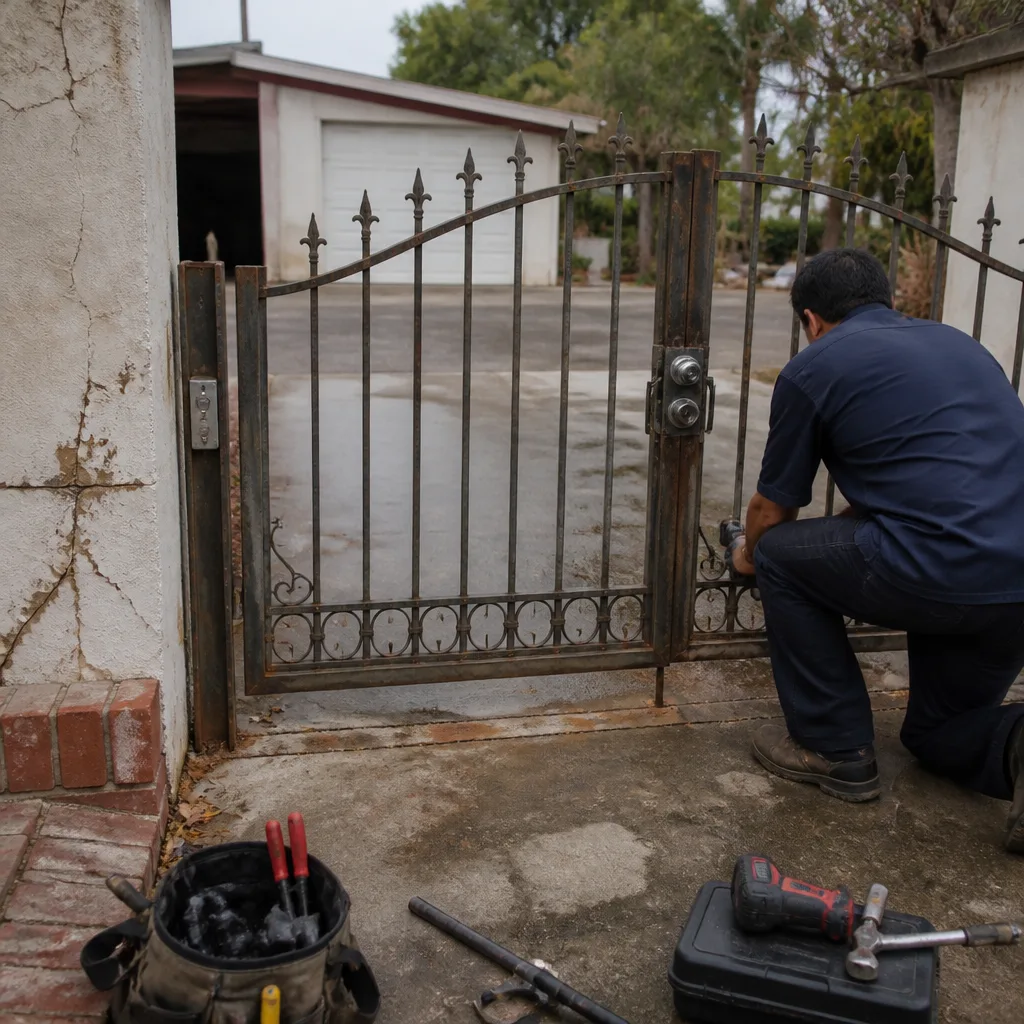 Before
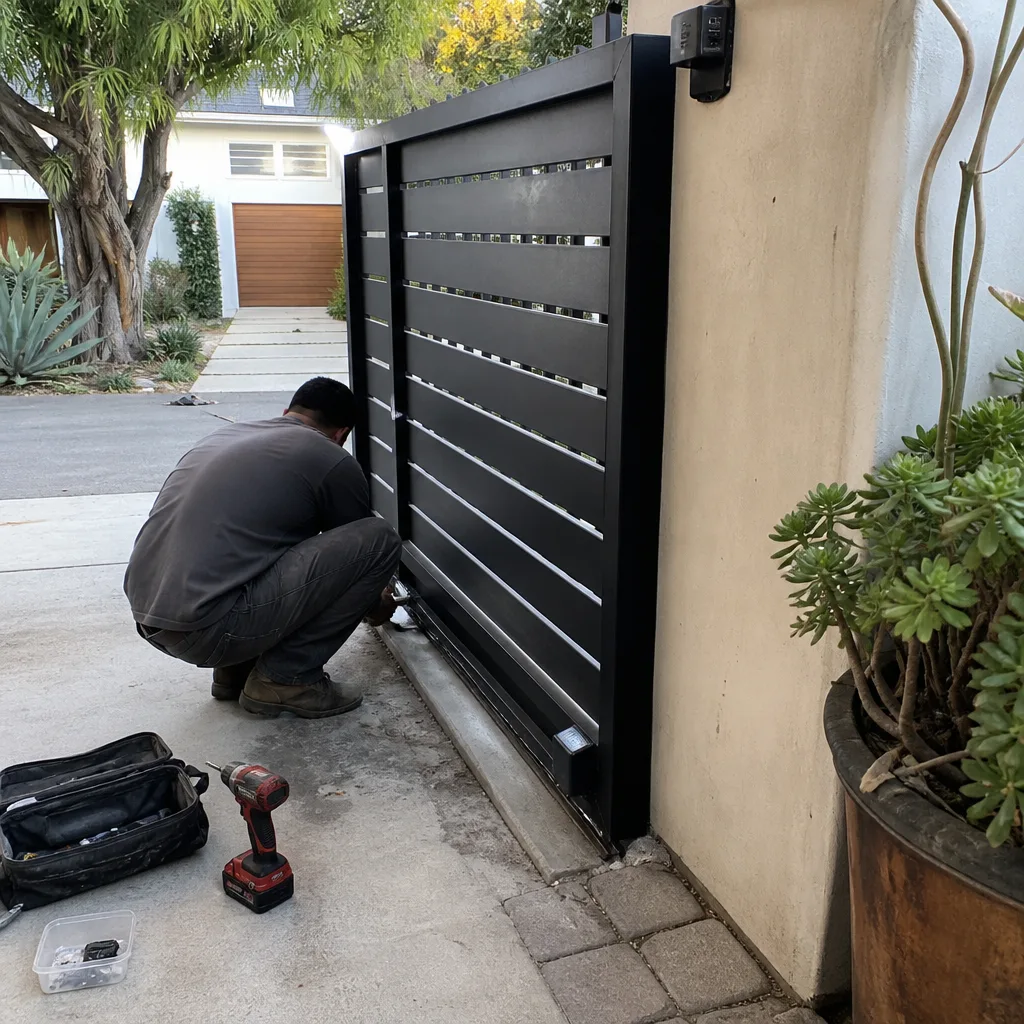
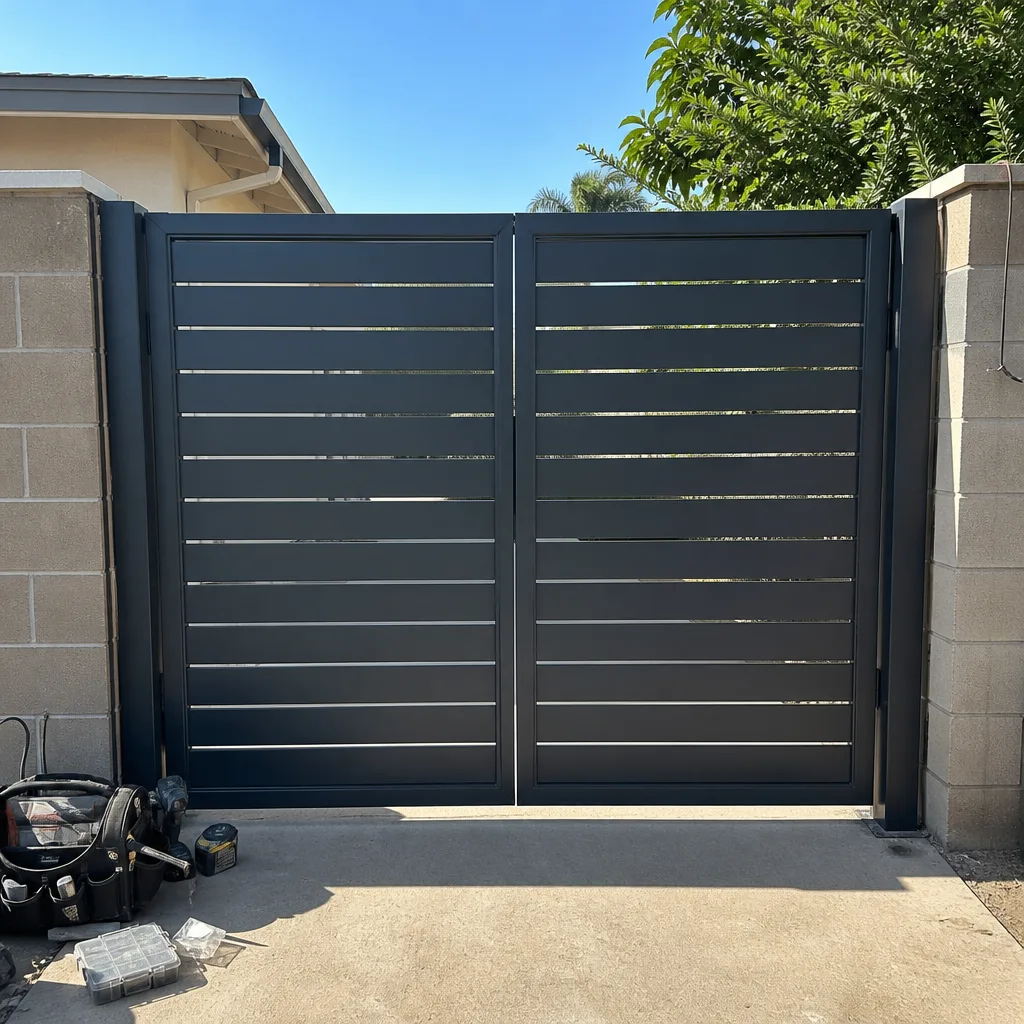 After
After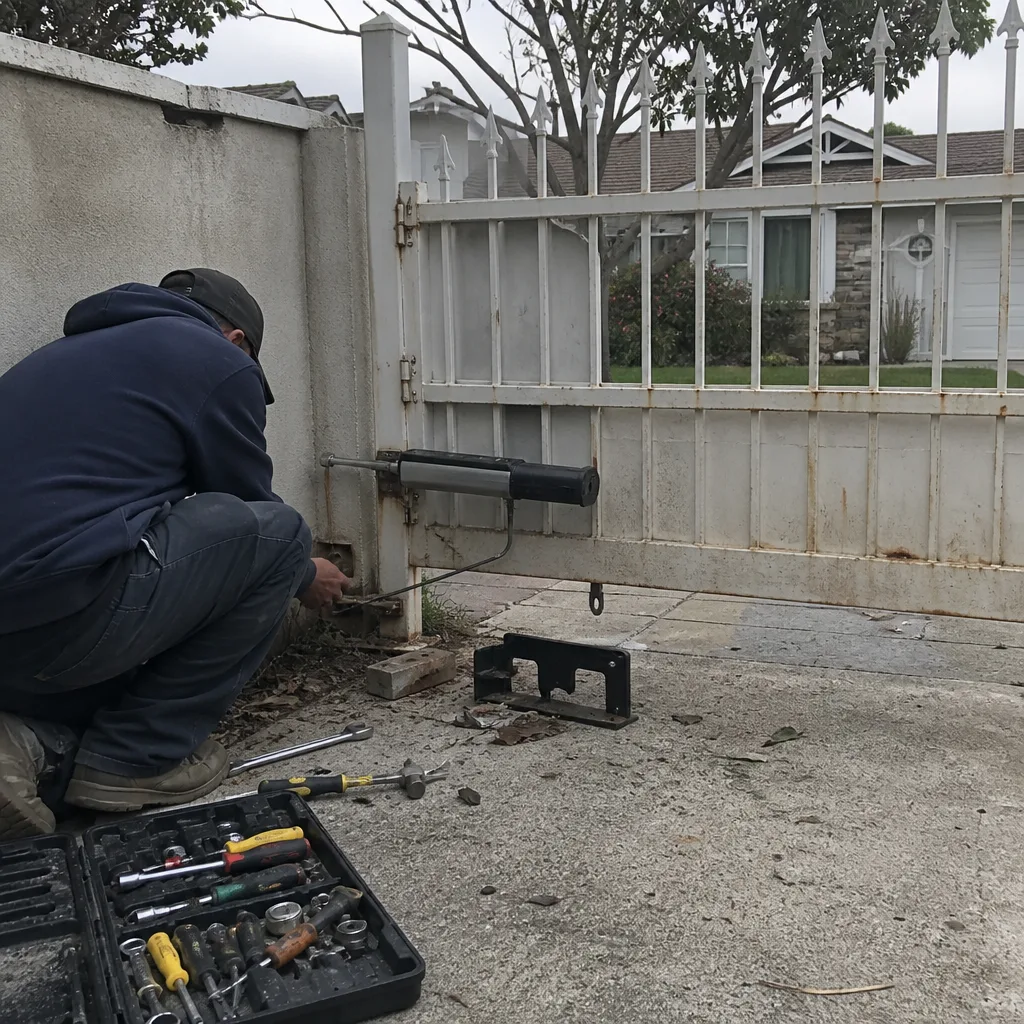 Before
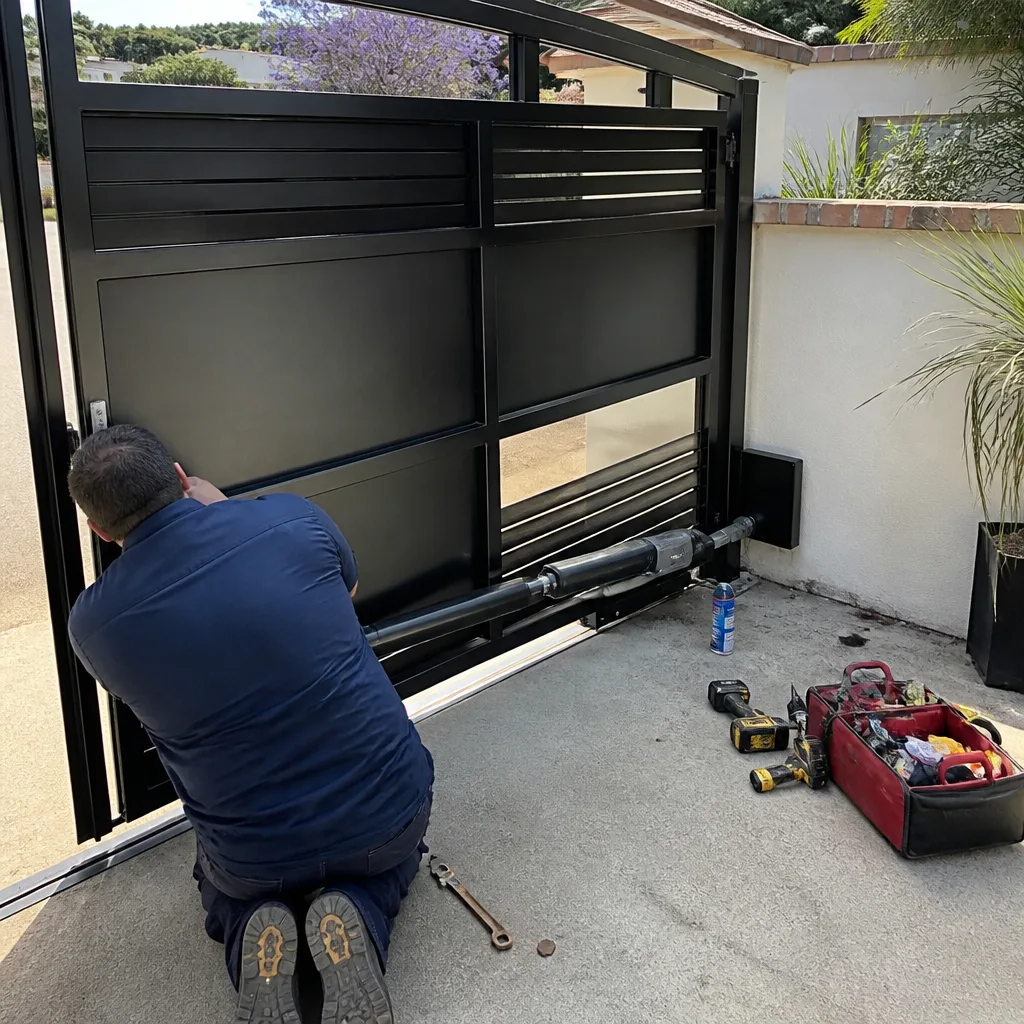 After
After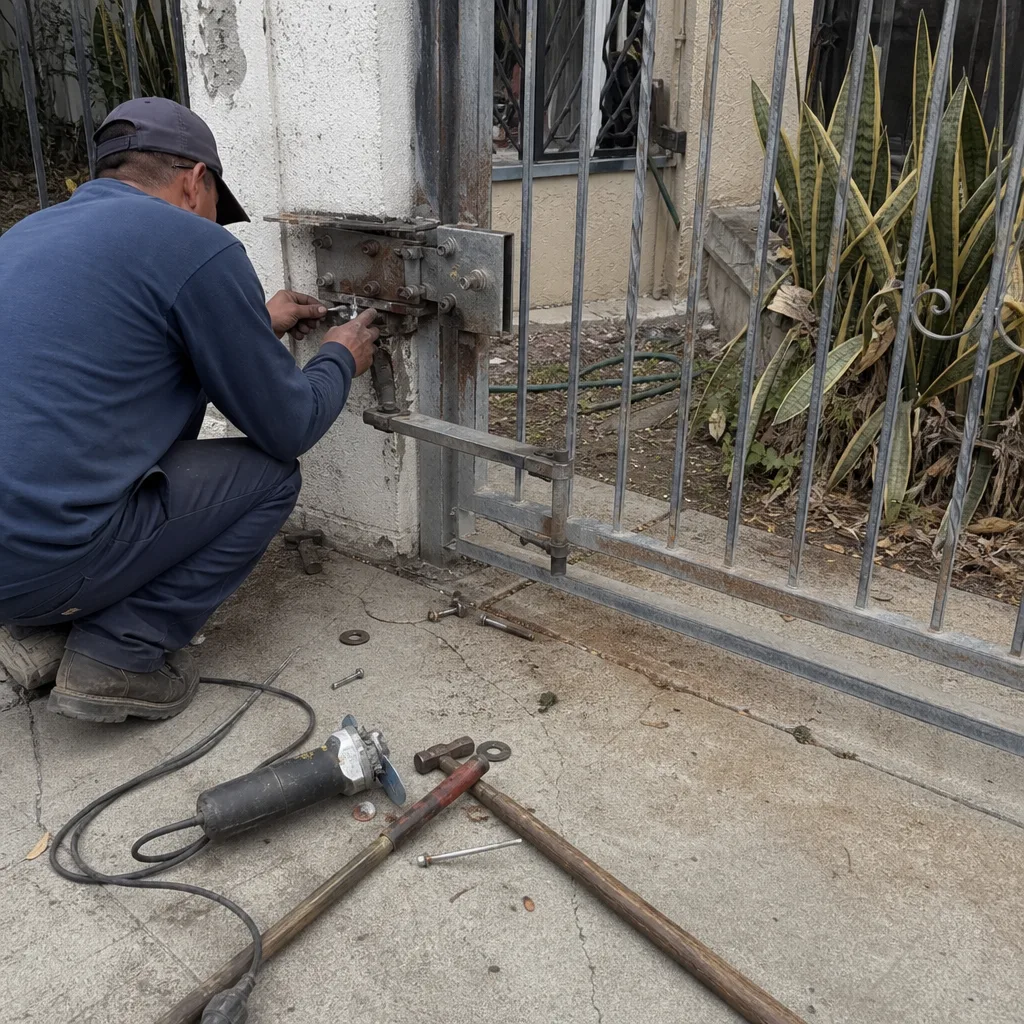 Before
 After
After