
Last updated October 16, 2026
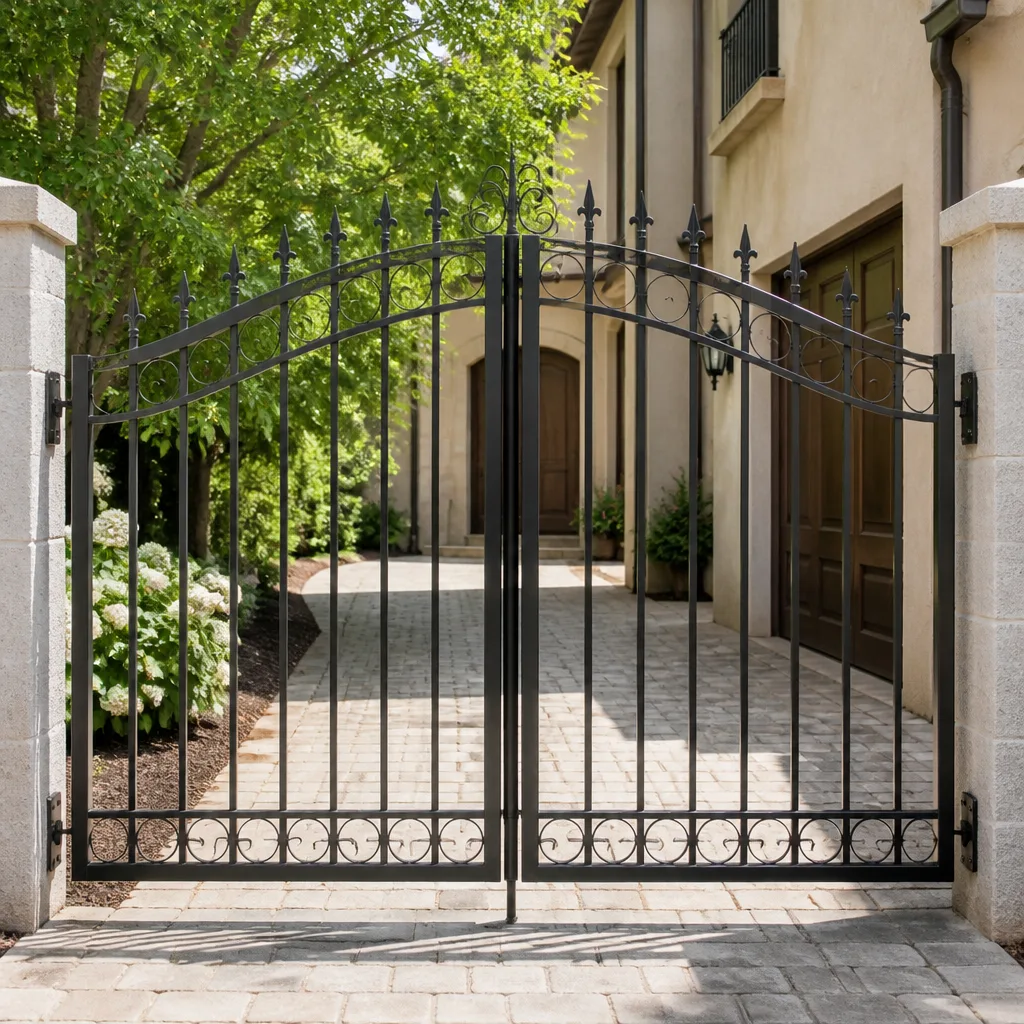 Wrought iron
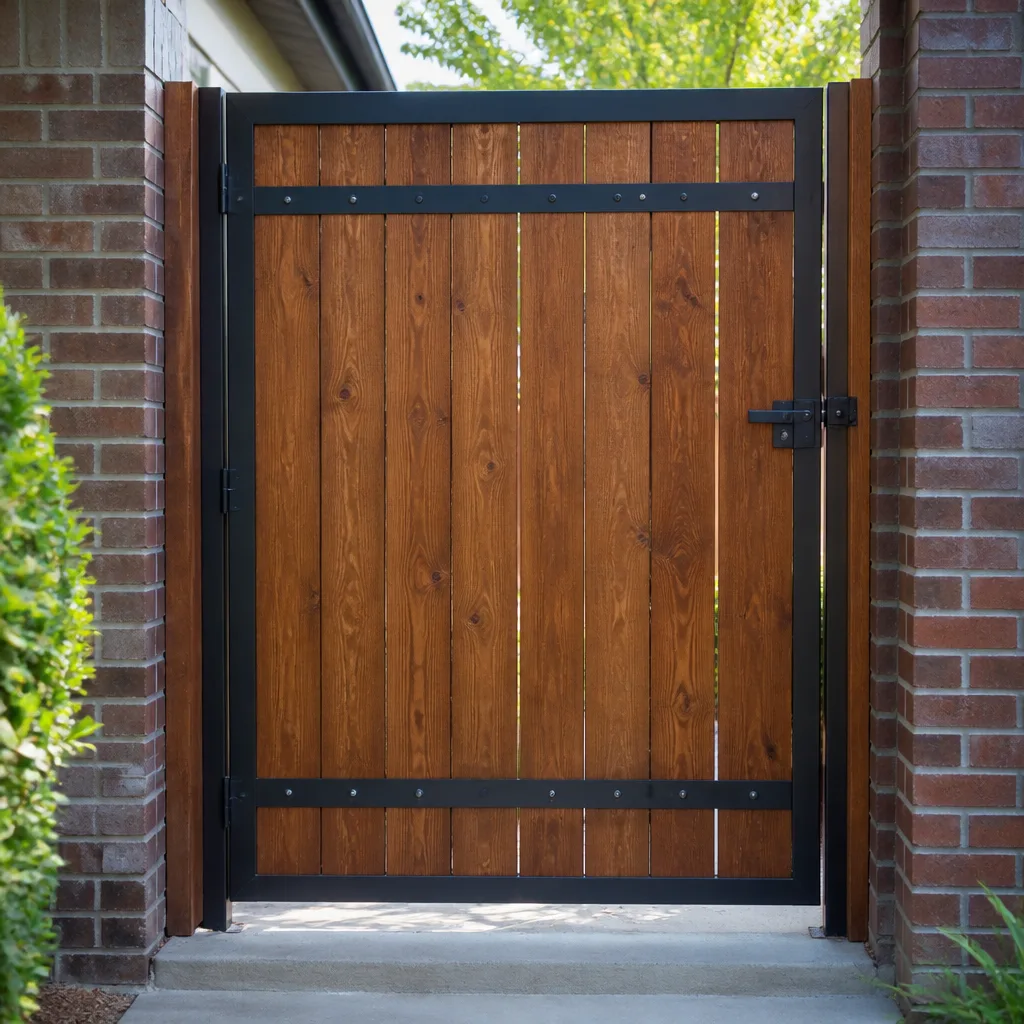 Wood & steel frame
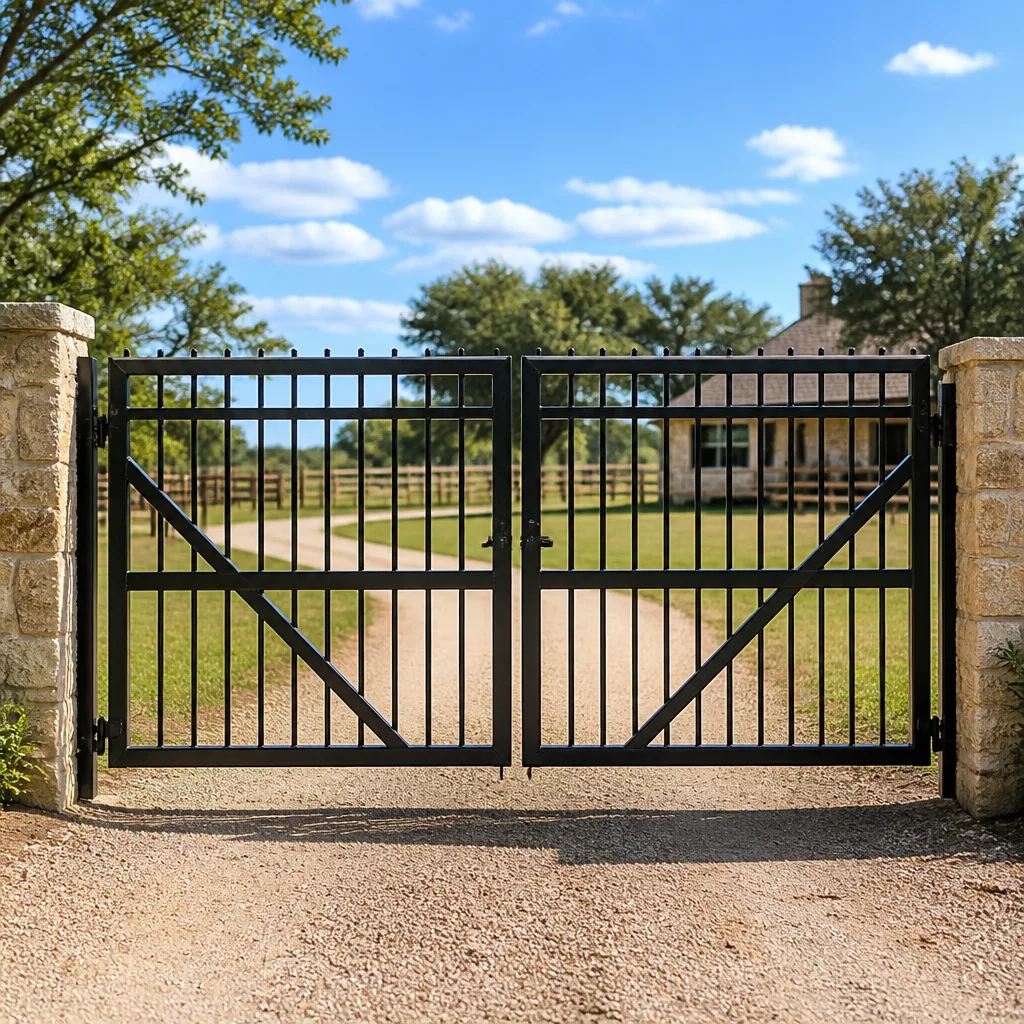 Farm & ranch
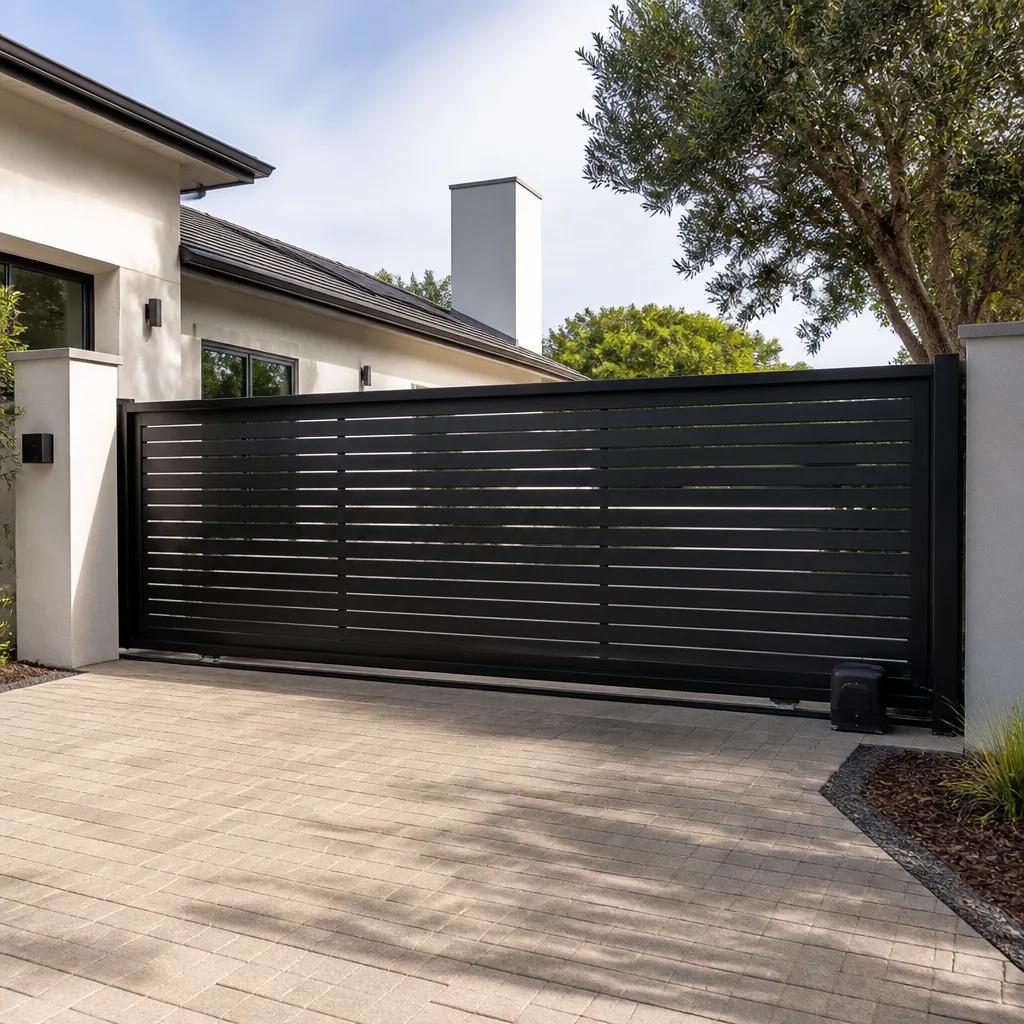 Sliding driveway gates
Free on-site gate assessment - hinges, posts, and your LiftMaster or Nice gate operator checked before anything is quoted
The assessment is free and the quote is the invoice.
Get your free estimateGate Repair Permits, Codes & Inspections in CA: What You Need to Know
Most homeowners assume gate repair never requires a permit. That assumption is expensive. In Los Angeles, a surprising number of gate jobs cross the line from “simple repair” into “permitted work” the moment you change more than a hinge or a wheel. A gate operator swap on a commercial property, a new post set in concrete, or any gate adjustment within five feet of a pool barrier can trigger requirements most repair companies never mention. By the time you find out, the inspector is standing in your driveway and the technician who did the work is gone. This guide walks through exactly where that line sits in California, how Los Angeles enforces it, and how to protect yourself before the first bolt gets turned. For related reading, see our Gate Repair Warning Signs: A Los Angeles Homeowner’s Reference Guide.
Quick Answer
Most cosmetic gate repairs in California need no permit at all, but you typically need one when the work involves replacing a gate operator above 1/2 horsepower, setting new posts or footings, changing gate dimensions, or working on any gate within five feet of a swimming pool barrier. Los Angeles adds its own layer through LADBS, and automatic gates must also meet UL-325 entrapment protection standards regardless of whether a permit is required. The safest route is a written confirmation from a licensed contractor or LADBS before work starts.
Styles & brands we work with
Table of Contents
- When a Gate Repair Actually Needs a Permit in California
- Los Angeles Specifics: LADBS and Local Code
- UL-325 Entrapment Protection: The Code Inside the Code
- HOA CC&Rs vs. City Code: Who Wins
- What “Grandfathered” Really Means for Older Gates
- How to Pull a Gate Permit in Los Angeles
- What a Permitted Gate Repair Costs in Los Angeles
- Common Mistakes to Avoid
- When to Call a Professional
- Frequently Asked Questions
When a Gate Repair Actually Needs a Permit in California
California’s building code is permissive about gate work, but it draws a bright line at anything structural, electrical, or life-safety related. Here’s the plain version. Replacing a wheel, greasing a track, adjusting a hinge, swapping a keypad, or replacing a gate remote: no permit. Replacing an entire gate operator: usually yes. The California Building Code requires a permit for any installation or replacement of electrical equipment, and a gate operator is electrical equipment. There’s a horsepower threshold worth knowing: operators rated at 1/2 horsepower or less on single-family residential gates often fall under the radar for permitting, but anything above that on a commercial or multi-family property will almost always require an electrical permit.
The other trigger most homeowners miss is the footing. If your gate sags and the fix requires cutting out the old post and pouring a new concrete footing, that’s structural work. In California, any new concrete footing supporting a gate post triggered a permit through most local jurisdictions. Los Angeles treats this as a building permit matter through LADBS, not a discretionary call for the contractor. If a contractor tells you they’ll “handle it under the table,” they’re not doing you a favor. They’re leaving you with an unpermitted structural change that will surface during a home sale, an insurance claim, or a neighbor’s complaint.
Here’s the quick breakdown of what needs a permit in California:
- Gate operator replacement above 1/2 horsepower – electrical permit required in most jurisdictions, including Los Angeles.
- New post installation or footing work – building permit through LADBS if concrete is involved.
- Changing gate dimensions or swing direction – a plan check may be required since it alters the property’s ingress/egress profile.
- Any gate within five feet of a pool barrier – falls under pool safety code (Section 3119B of the California Residential Code), and any modification requires compliance verification.
- Low-voltage wiring for keypads, sensors, or intercoms – usually exempt if under 50 volts, but Los Angeles requires the work meet current electrical code standards regardless of permit exemption.
Our general rule after seventeen years in our Gate Repair services: if the repair changes how the gate operates rather than how it looks, ask for a permit check. A ten-minute call to LADBS or a licensed contractor beats a stalled escrow.
Los Angeles Specifics: LADBS and Local Code
Los Angeles operates through the Department of Building and Safety, known to anyone who’s ever remodeled as LADBS. The city adopts the California Building Code with local amendments, and gate work falls under the same umbrella as fences, retaining walls, and pool barriers: covered by the Los Angeles Residential Code. What makes Los Angeles different from, say, Bakersfield or Riverside, is the sheer density of older hillside properties, many with gates on slopes, gates near pools, and gates controlling access to homes set far back from the street. LADBS inspectors see gates as part of the property’s safety envelope, not as standalone features.
Los Angeles also enforces the city’s Zoning Code separately from its building codes. A gate that changes your front setback (for example, a new sliding gate that pushes the opening closer to the street than the original) can require zoning sign-off as well as a building permit. The Department of City Planning may need to review the change if the gate alters pedestrian access or blocks a fire department access path. Hillside neighborhoods like Beachwood Canyon, Mount Washington, and parts of the Palisades have additional fire access requirements. If your gate blocks an emergency vehicle turnaround, you’ll be fixing it twice: once for code compliance, once for the Red Flag fire inspection that flagged it.
Here’s how the LA permitting layers stack for a typical gate job:
- Building permit – for footings, posts, and any structural changes. Issued by LADBS.
- Electrical permit – for operator replacement and any 120-volt power work. Issued by LADBS, often as a separate sub-permit.
- Zoning review – when the gate alters the street-facing profile or setback. Handled by City Planning.
- Pool safety compliance – any gate within the five-foot barrier zone must self-close, self-latch, and open away from the pool. Inspected as part of the permit.
- Fire department sign-off – for gates on hillside roads or any property with a key box requirement. LAFD reviews access before final sign-off.
If that sounds like bureaucracy, it saves you from a bigger problem: selling a house with an unpermitted gate operator and having the buyer’s inspector flag it. We get calls from sellers in exactly that situation several times a year. By then, the permit needs to be retroactive, the entrapment protection must meet current UL-325 standards, and the repair costs double because the work has to be redone to pass inspection. A permit pulled at the start is the cheapest part of the job.
UL-325 Entrapment Protection: The Code Inside the Code
UL-325 is the standard from Underwriters Laboratories that governs automatic gate operators. California adopted it into the state’s building code, which means it has the force of law here. What UL-325 says in plain English: every automatic gate must be equipped with at least two independent means of entrapment protection. The operator cannot rely on a single sensor or a single pressure reversal. If one system fails, the other must still stop the gate from crushing a person, a pet, or a vehicle.
The most common compliant setup is a pair of photoelectric sensors (the little black eyes mounted on the gate posts) plus an inherent adjustable clutch or current-sensing mechanism inside the operator. The sensors detect an obstruction in the gate’s path and reverse it. The clutch or current sensor detects the resistance of something pressing against the gate itself and reverses it. Both must be present and working. A gate operator installed with only one of these systems is out of compliance the moment it’s wired up.
Here’s where repair work creates accidental code violations. If you have an older FAAC or Viking operator that worked fine for fifteen years, and a technician replaces just the control board, the new board may not interface with your old sensors. The technician may bypass the sensor inputs to get the gate moving again. You now have a functioning gate and a code violation. The same thing happens when someone replaces a BFT or Linear operator but reuses old wiring that’s deteriorated enough to cause intermittent sensor failures. The gate still opens. The entrapment protection doesn’t. If that gate injures someone, the homeowner is the one who gets sued, not the technician who did the work.
A proper repair update includes verifying that both entrapment systems function independently before the technician leaves. That means blocking the sensor beam with a tool and watching the gate stop. Then pressing against the gate edge while it’s closing and watching it reverse. A technician who won’t do that before driving away is not finishing the job. This is also why we write the entrapment verification into Electric Gate Repair in Los Angeles as a standard part of the job, not an add-on.
HOA CC&Rs vs. City Code: Who Wins
If you live in an HOA-governed community in Los Angeles, you have two sets of rules on any visible gate change: the city’s code and the HOA’s Covenants, Conditions, and Restrictions, or CC&Rs. Most homeowners assume one overrides the other. The reality is they operate in parallel, and you can satisfy one while violating the other.
City code governs safety, structure, and electrical work. That’s what LADBS enforces. Your HOA’s CC&Rs govern aesthetics, materials, height, color, and whether you’re allowed to have a gate at all in a particular location. The HOA cannot override city code. If LADBS says your gate needs a pool-safety latch, the HOA cannot waive that. But the city also doesn’t enforce your HOA’s design standards. If your CC&Rs require a black wrought-iron gate and you install a modern aluminum one that passes every city code, you’re still in violation of the HOA agreement and they can fine you or force a replacement.
The sequence that protects you is simple and our advice is the same for every one of these: written HOA approval first, then city permit, then work. HOA approval in writing protects you from a retroactive enforcement action. The city permit protects you from an unpermitted work violation. Both protect you from having to redo the work at your own expense. In Los Angeles, where many communities in the Valley, the Westside, and master-planned areas like Porter Ranch or Playa Vista have strict architectural review boards, skipping HOA approval is the most common reason a finished gate job gets torn out within six months.
A note from experience: HOA architectural review boards in Los Angeles move slowly. We recommend requesting approval at least 45 days before you want the work done. Some boards meet monthly. Others require two consecutive monthly meetings for an item. The city permit, by contrast, often clears in a week or two for a simple gate project through LADBS’s express permit system. The HOA is your long pole.
What “Grandfathered” Really Means for Older Gates
“Grandfathered” is the most misunderstood word in California gate compliance. A gate is grandfathered when it was installed legally under the code in force at the time, and that code has since changed. The gate does not need to be retrofitted to meet the new code every time the code updates. That’s the protection grandfathering gives you. What it doesn’t give you is permanent immunity.
In Los Angeles, three events strip grandfathered status:
- Sale of the property. A buyer’s home inspector will flag a non-compliant gate. The buyer’s lender may require correction before funding. Even if it doesn’t block the sale, the cost of bringing the gate current becomes a negotiation point, and it’s always more expensive to fix under a closing deadline.
- A major repair that touches the operator. If you replace the control board, the operator, or the entrapment sensors, California code treats that as bringing the entire system under current requirements. You can’t repair an old FAAC operator with new parts and keep the old code’s laxer standards. The moment you modify it, the current UL-325 rules apply to the whole gate.
- An insurance claim involving the gate. If a gate-related injury or vehicle damage claim is filed, the insurance company’s adjuster will check compliance. A grandfathered gate that was modified without updating entrapment protection gives the insurer grounds to deny coverage.
The practical takeaway: your grandfathered gate is protected until you touch it. The repair that finally forces a full code upgrade is almost always the operator replacement. When we quote a repair on an older system, we include the compliance work in the written price so there’s no surprise. A homeowner who knows this before the repair is never the one whose sale stalls over a gate.
How to Pull a Gate Permit in Los Angeles
Pulling a gate permit in Los Angeles is straightforward if you know which department handles what. LADBS runs an online system that covers most residential gate work. Here’s the step-by-step path, including what a licensed contractor should handle versus what falls on you.
- Determine the permit type. Structural work (posts, footings) needs a building permit. Operator replacement needs an electrical permit. Some jobs need both. A licensed contractor will tell you which applies based on the scope.
- Gather documentation. You’ll need a site plan showing the gate location relative to the property line, the house, and any pool. For electrical work, the operator’s spec sheet with horsepower rating and UL-325 compliance listed. For any gate near a pool, the pool’s existing safety compliance documents.
- Submit through LADBS’s ePlanLA or express permit system. Simple residential permits often clear in 5 to 10 business days. Complex or hillside projects may go to plan check, which adds two to four weeks.
- Schedule the inspection. The city inspector checks the footing depth and concrete placement for structural work, and the wiring, grounding, and entrapment protection for electrical work. Both inspections must pass before the permit closes.
- Keep the permit record. LADBS permits are public record. When you sell, the buyer’s agent can pull the permit history. A closed permit with a final inspection signature is your proof the work is code-compliant.
What the contractor should handle: the application, the plan submittal (if needed), the inspection scheduling, and all code corrections required to pass. What falls on you: the homeowner is legally responsible for the permit’s existence regardless of who files it. If your contractor says they’ll pull the permit but doesn’t, LADBS comes after you, not them. Verify the permit number before work starts. A licensed contractor who won’t put the permit number on the written proposal or calls a permit “unnecessary” for work that clearly falls into permit territory is a red flag we’ve seen too many Los Angeles homeowners miss. See How to Hire a Gate Repair Contractor in Los Angeles: A Step-by-Step Guide for vetting tips.
What a Permitted Gate Repair Costs in Los Angeles
Permit costs in Los Angeles are modest compared to the repair itself. Here are realistic ranges we see in the current market:
- Electrical permit for a residential gate operator: $180-$450 depending on the operator’s horsepower and whether plan check applies.
- Building permit for a new gate post and footing: $250-$600, more if the gate is on a hillside requiring additional foundation detail.
- Zoning review (if triggered): $200-$800 depending on whether it’s a simple over-the-counter review or a full staff-level analysis.
- Pool safety compliance inspection: $150-$350 when it’s a standalone inspection tied to gate work near a pool.
- Contractor’s permit administration time: $100-$300, typically bundled into the job as a line item or absorbed into the total repair cost.
For a full operator replacement on an older Los Angeles property where the existing system is out of compliance, the total job with permits, new entrapment sensors, and the operator itself typically lands between $1,800 and $4,500 depending on the brand, the gate’s weight, and how much of the old wiring needs replacement. BFT and FAAC operators tend to run on the lower end of the hardware cost, while Viking and some Linear models with higher horsepower ratings push toward the upper end. Any repair company that quotes a gate operator replacement in Los Angeles without mentioning permits is either doing unpermitted work or working under the 1/2 horsepower threshold and should say that explicitly. Ask for the permit language in the written quote. Our written quotes always state the permit status for the specific job. For additional help, explore more guides & resources on our blog.
Common Mistakes to Avoid
- Assuming the repair company handles permits. Many don’t. Some will do the work and never pull one. You’re left with the liability. Verify the permit exists before work starts.
- Replacing an operator without upgrading entrapment protection. This is the fastest way to create a code violation on your property. A new BFT operator on old single-sensor wiring is a current-code failure, and you now own it.
- Skipping HOA approval for a visible gate change. In Los Angeles, CC&R enforcement is aggressive in planned communities. Your new gate is beautiful and your HOA is fining you monthly.
- Modifying a grandfathered gate before selling. The repair forces the upgrade, but the upgrade doesn’t get done, and now the sale is stalled. Fix the gate to current code or leave it untouched until after closing.
- Choosing a contractor based on price without a written permit plan. If the quote is $800 below everyone else and doesn’t mention a permit, you’re paying for an unpermitted job that may need to be redone later for $4,000.
- Ignoring pool barrier requirements when the gate is near a pool. Los Angeles enforces the five-foot rule. A gate that doesn’t self-close and self-latch toward the pool is a violation the inspector can flag during an unrelated inspection of the property.
When to Call a Professional
Any gate work involving electricity, concrete, or code compliance belongs with a licensed contractor. That includes operator replacement, post replacement, any repair on a gate within five feet of a pool, and any job where the gate is older than 15 years and may be grandfathered under a code that no longer applies once the work starts. A professional will tell you what needs a permit before the first bolt is turned, pull the right one, and stand behind the repair in writing. Gate Repair in Los Angeles should always include a written price and a written guarantee. Portcullis Gate Repair Los Angeles offers free estimates across Los Angeles and can tell you in a single phone call whether your gate job needs a permit. Call (213) 322-0062 for a straight answer.
Frequently Asked Questions
Yes, in most cases you need an electrical permit to replace a gate operator in California, especially if it’s rated above 1/2 horsepower or installed on a commercial or multi-family property. Los Angeles enforces this through LADBS, and the work must also meet current UL-325 entrapment protection standards. Call (213) 322-0062 if you want us to check your specific operator’s rating before you commit to a repair.
The buyer’s home inspector will flag the unpermitted gate, and the buyer can demand a credit, a repair, or cancellation of the sale. LADBS permit records are public, and most real estate transactions in Los Angeles now include a permit history check. It’s far cheaper to correct the permit before listing than to fix it under a closing deadline.
Yes, California’s pool safety code treats any gate within the five-foot barrier zone as part of the pool enclosure, not as a standalone gate. It must self-close, self-latch, and open away from the pool, and any repair that alters that gate triggers pool safety compliance verification through LADBS.
Yes, if the repair changes the gate’s appearance, height, material, or location, your HOA’s CC&Rs apply even though the city code also applies. HOA approval and city permits are separate requirements. Get both in writing before work starts.
UL-325 requires at least two independent entrapment protection systems on every automatic gate: typically photoelectric sensors plus an inherent pressure-reversal mechanism inside the operator. Both must be present and working. A gate with only one system is a California code violation.
A simple residential gate operator permit through LADBS usually clears in 5 to 10 business days through the express permit system. More complex jobs with plan check or zoning review take two to four weeks. HOA approvals are often slower, so start that process first. Call (213) 322-0062 and we can tell you what to expect for your specific gate.
The Bottom Line
Most gate repairs in Los Angeles do not need a permit, but the ones that do tend to be the expensive ones: operator replacements, new posts, anything near a pool, and any work on a grandfathered gate. The cost of the permit is small, usually a few hundred dollars, and the cost of skipping it can be thousands in rework or a stalled home sale. Get the permit status in writing before work starts, verify the entrapment protection is current, and get your HOA’s written approval if the gate’s appearance changes. For Gate Installation in Los Angeles or any repair where the permit question matters, ask the contractor to state it plainly. We do. Every time.
Written by Dean Prescott, Owner at Portcullis Gate Repair Los Angeles, serving Los Angeles since 2008. For a free estimate on your gate repair, visit our Portcullis Gate Repair Los Angeles home page or call (213) 322-0062.
See the difference
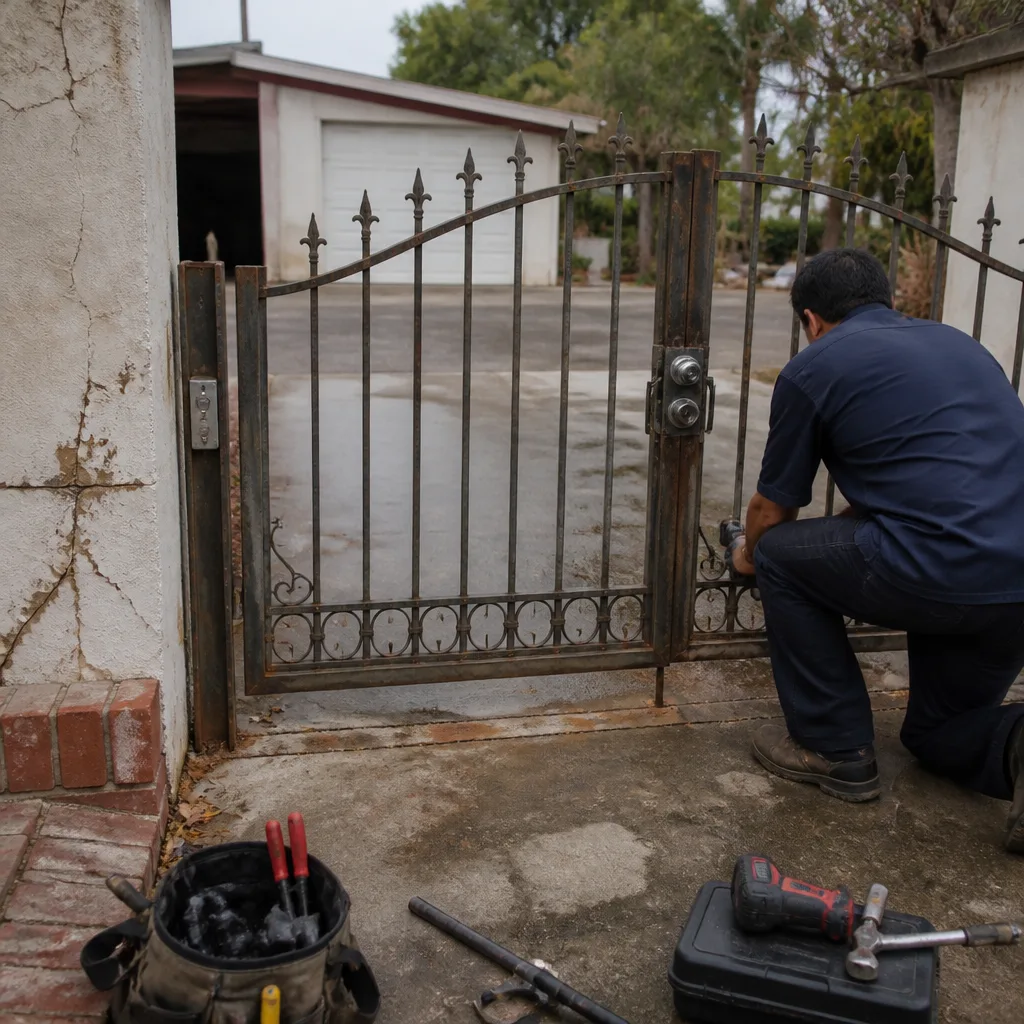 Before
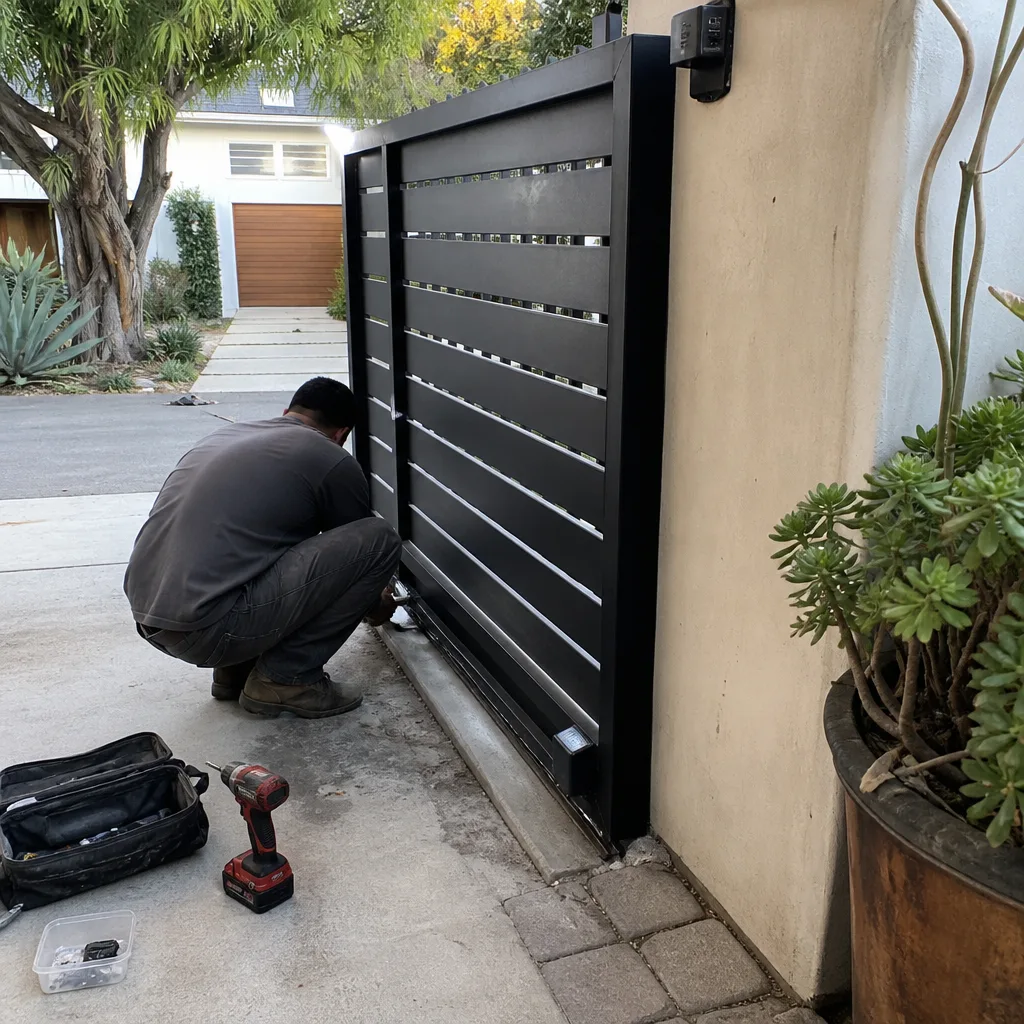
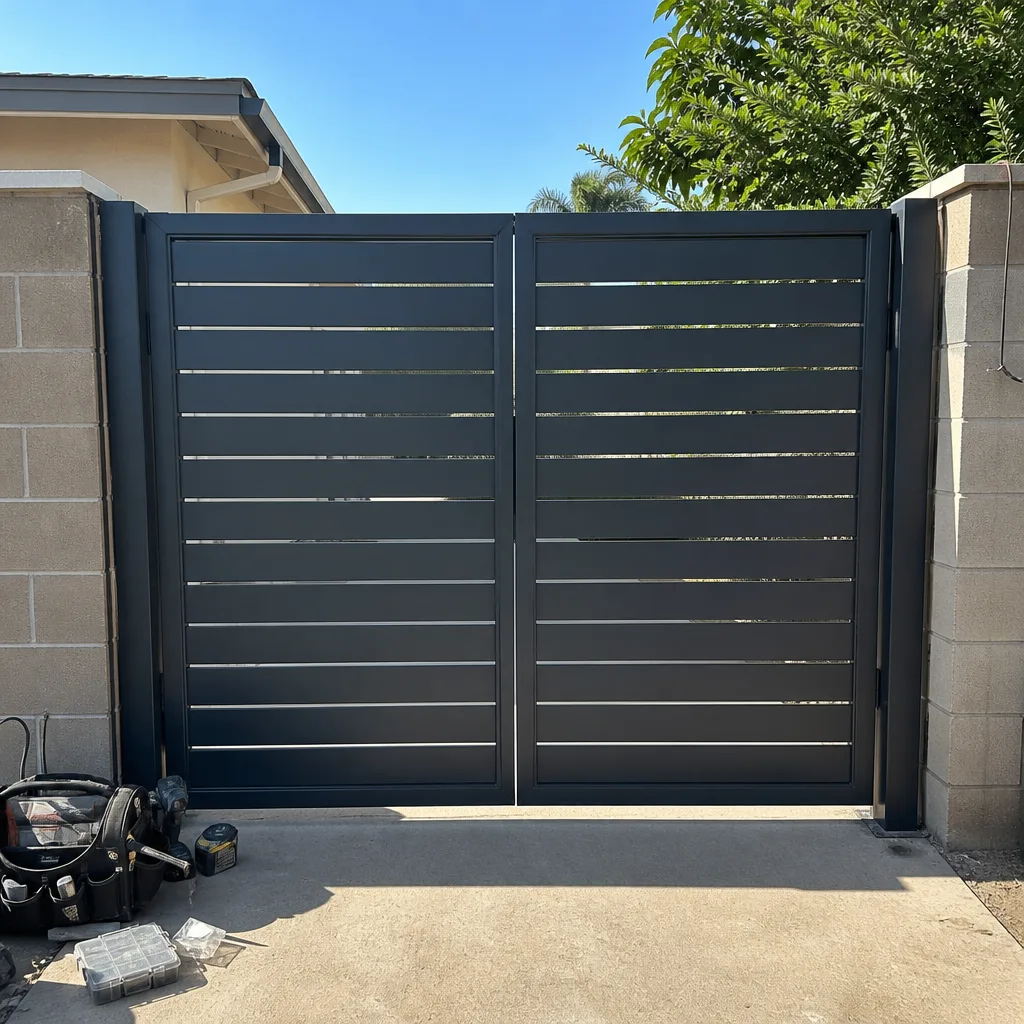 After
After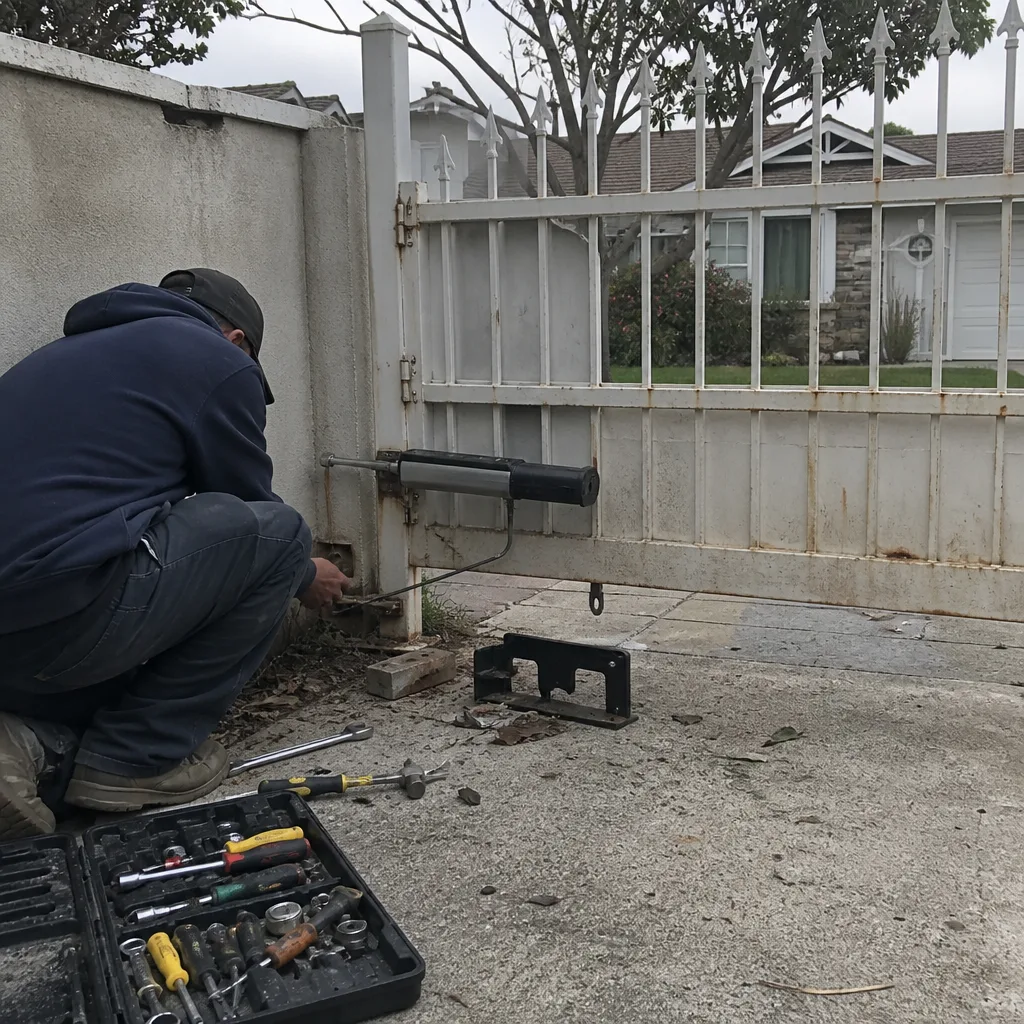 Before
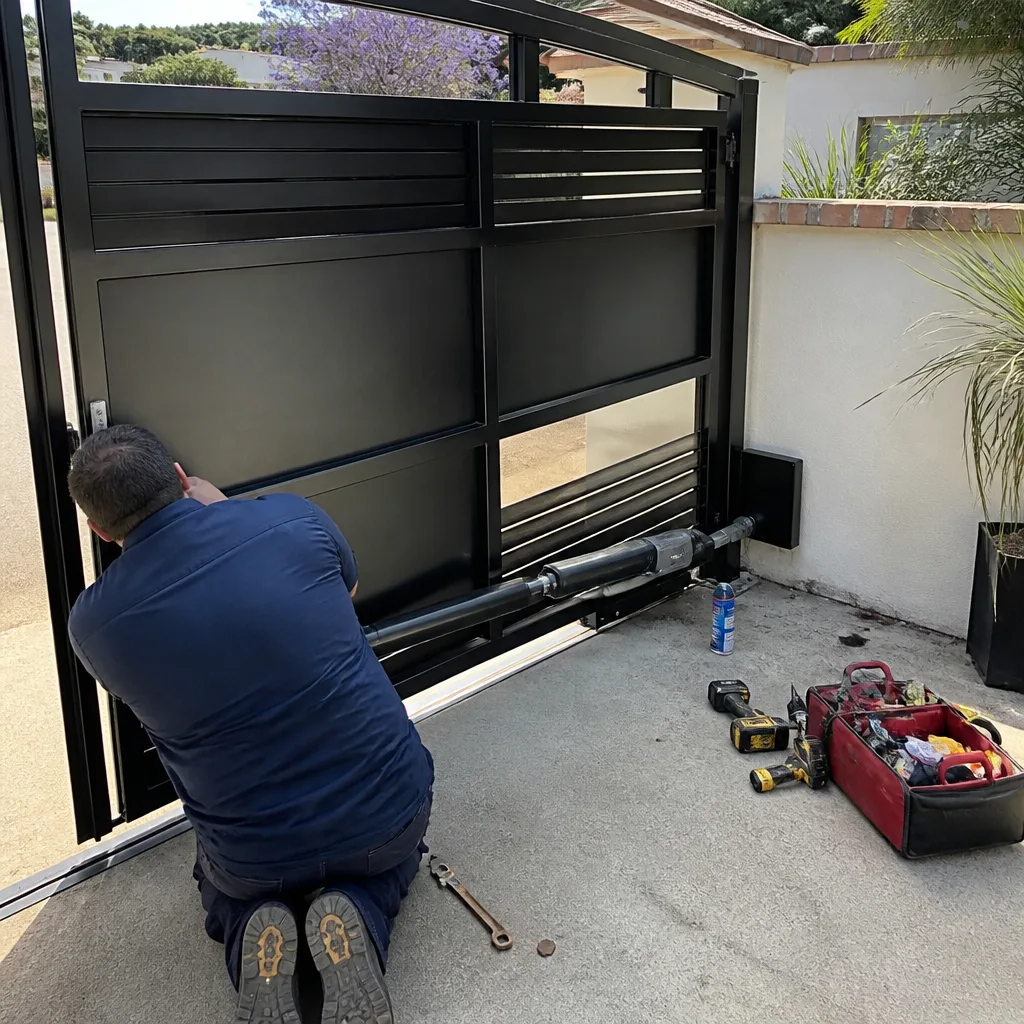 After
After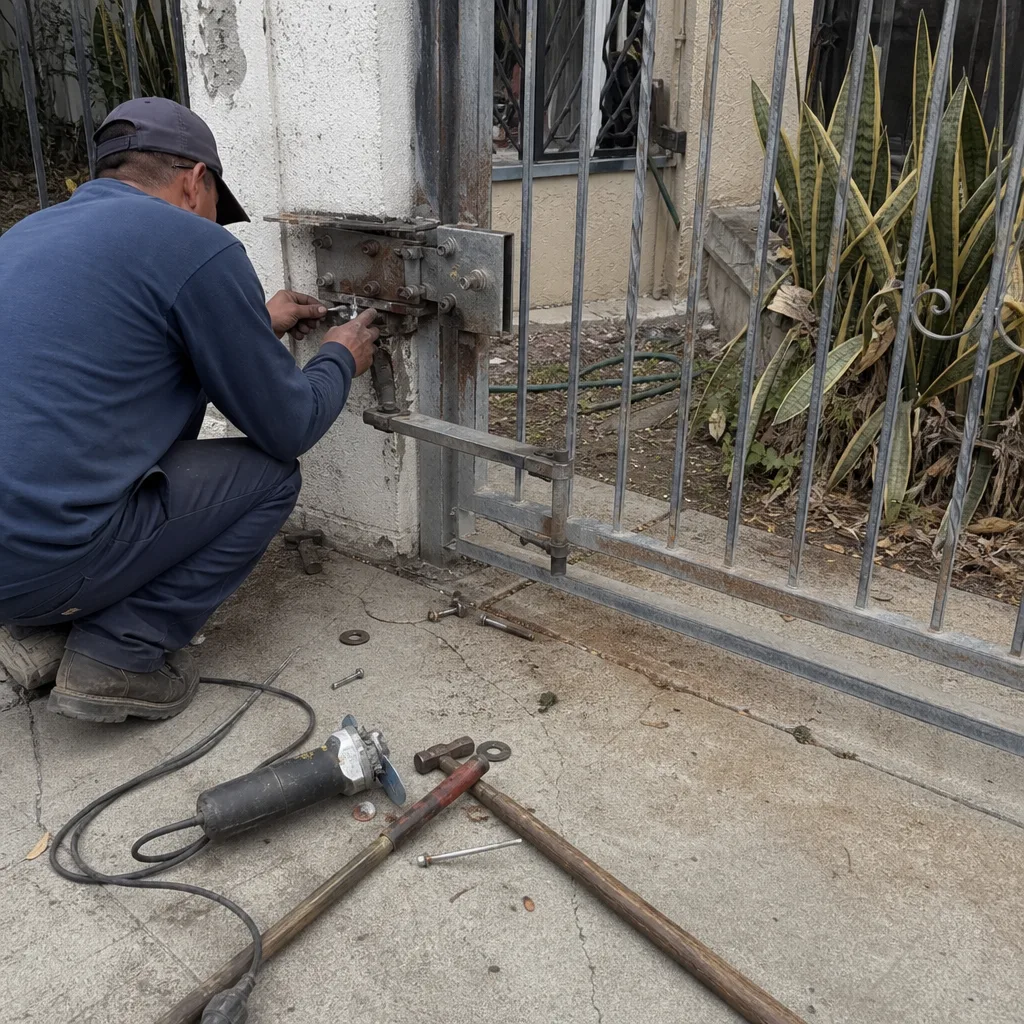 Before
 After
After