
Last updated October 16, 2026
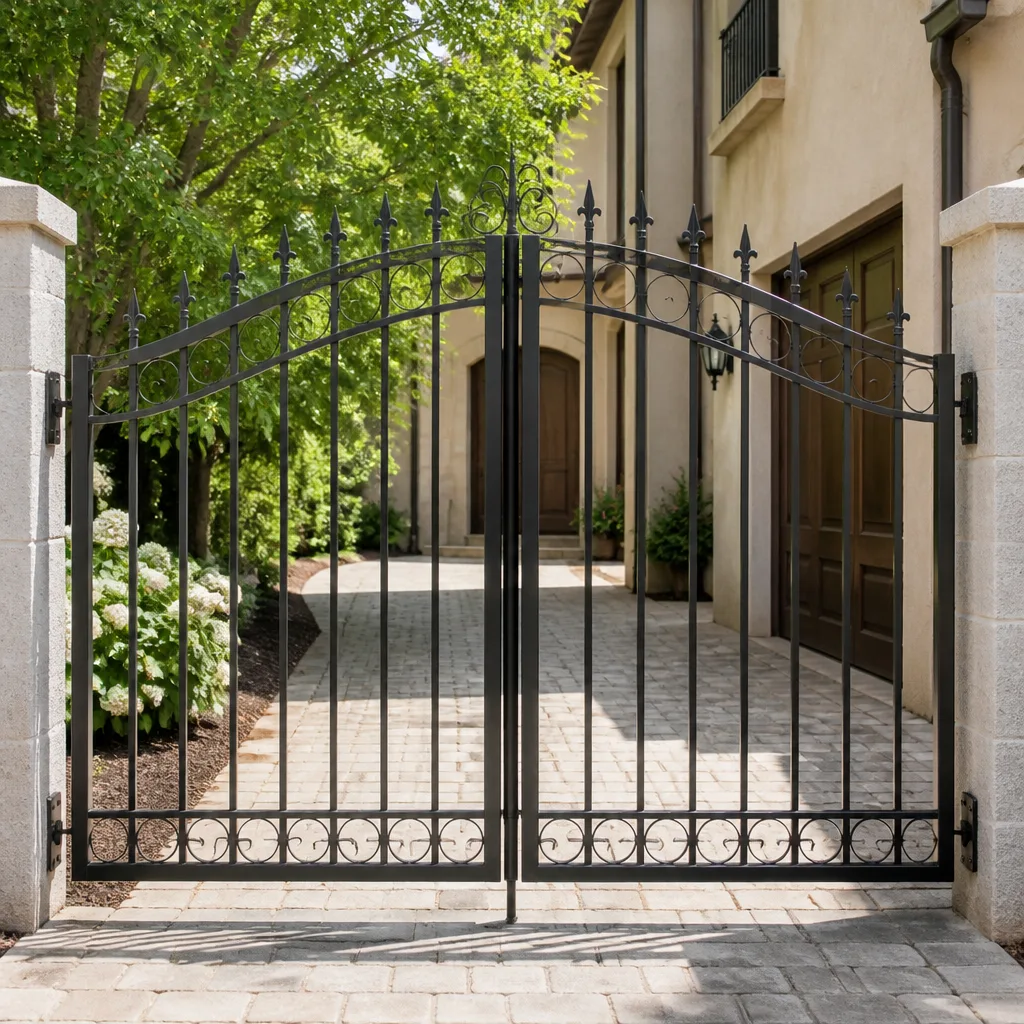 Wrought iron
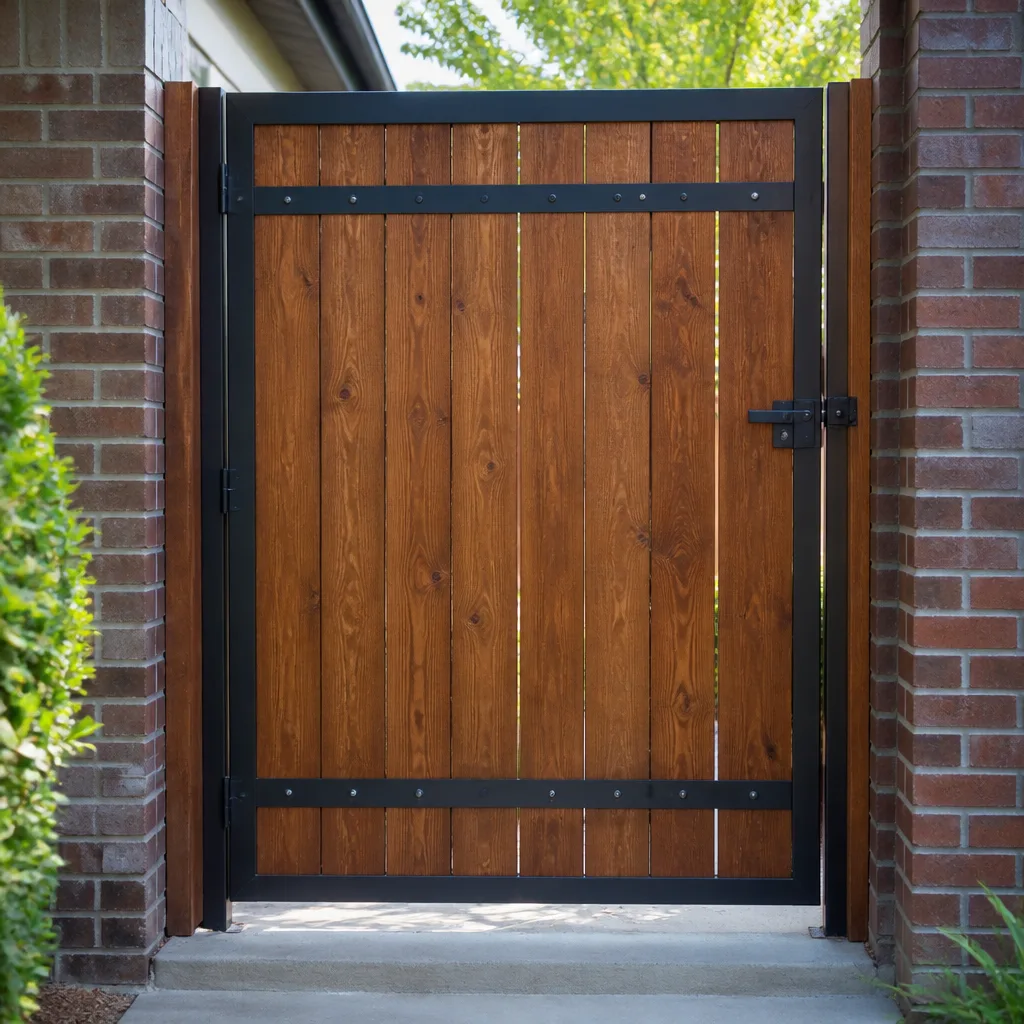 Wood & steel frame
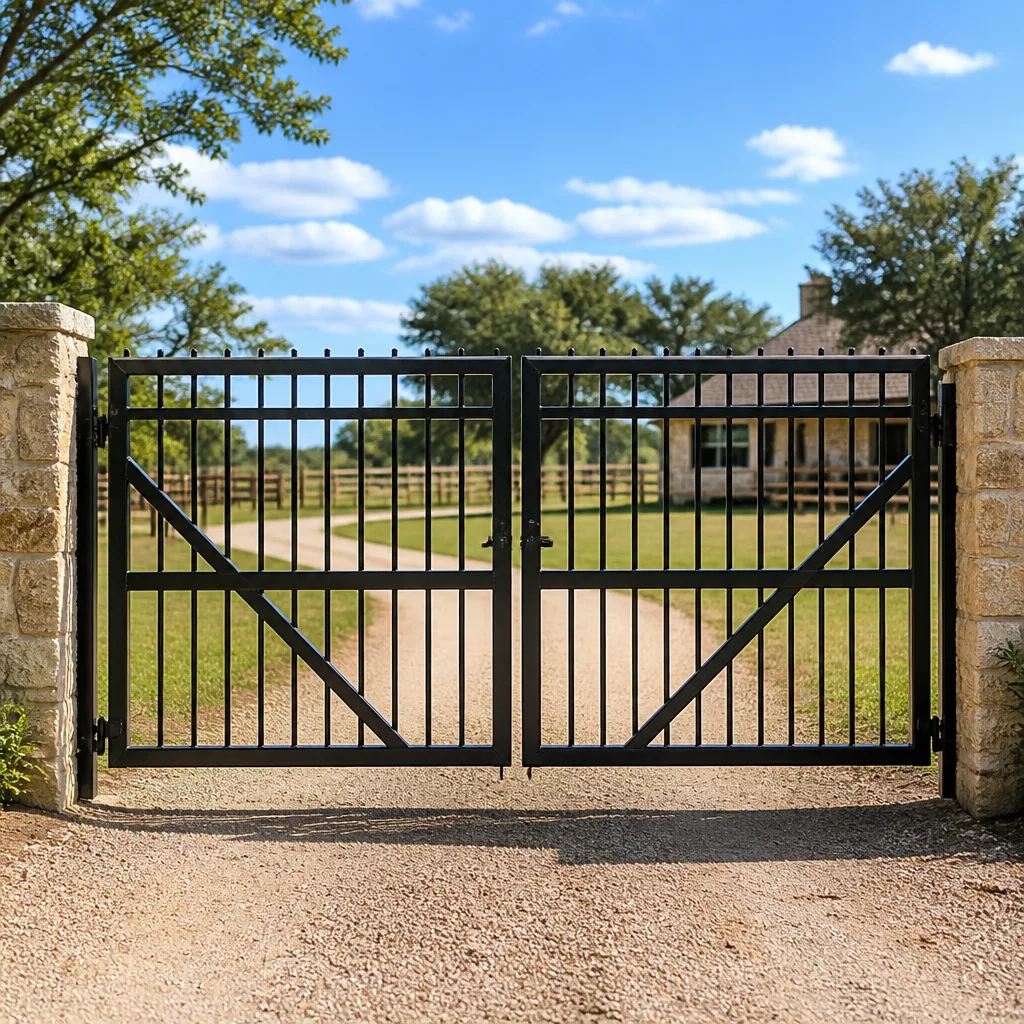 Farm & ranch
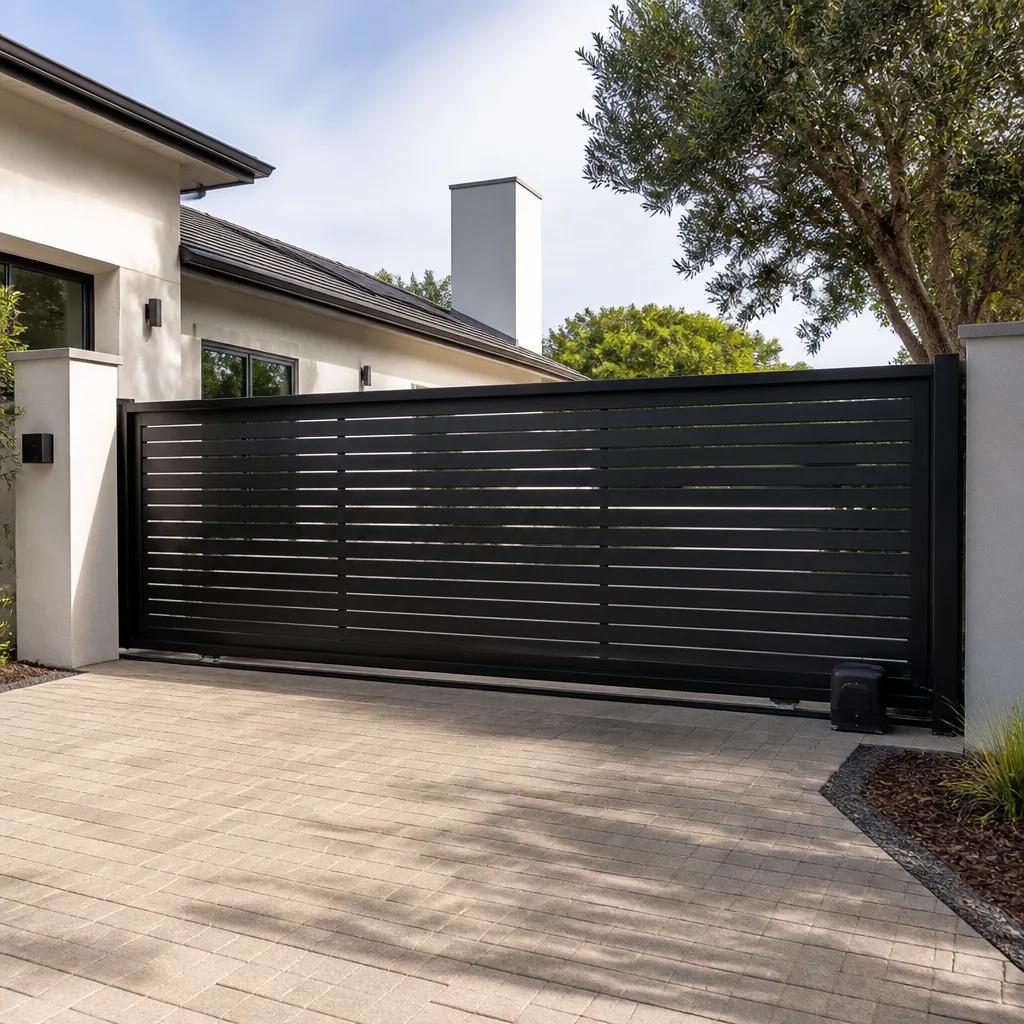 Sliding driveway gates
Free on-site gate assessment - hinges, posts, and your LiftMaster or Nice gate operator checked before anything is quoted
The assessment is free and the quote is the invoice.
Get your free estimateGate Repair Warning Signs: A Los Angeles Homeowner’s Reference Guide
A gate that reverses for no reason isn’t being stubborn. It’s telling you the safety sensor is misaligned or has a failing wire, and that’s usually an $80 fix. Ignore it for two more months and the operator board burns itself out trying to compensate, and now you’re looking at a $400 repair. Every gate failure in Los Angeles announces itself before it happens. The problem is that most homeowners never learned the language. This guide translates the sounds, movements, and timing changes your gate makes into plain English, so you can act before a small adjustment becomes a full replacement. For Gate Repair service when you need it, we’re here to help.
Quick Answer
The most common gate repair warning signs in Los Angeles are grinding or squealing noises during operation, a gate that opens or closes slower than it used to, random reversals mid-cycle, visible sagging or dragging on the ground, and an operator motor that runs but doesn’t move the gate. For How to Hire a Gate Repair Contractor in Los Angeles: A Step-by-Step Guide, see our detailed breakdown. Each of these points to a specific component, and most are repairable for under $450 when caught early. Waiting turns a $180 hinge adjustment into a $1,900 operator and track replacement.
Styles & brands we work with
Table of Contents
- Symptom-to-Cause Reference Table
- How to Tell a Gate Problem From an Operator Problem
- What Your Gate Is Saying: Sounds That Signal Trouble
- Movement Warnings: Speed, Sag, and Stutter
- Why Los Angeles Hillside Homes See Different Warning Signs
- Imminent Failure vs. Repairs That Can Wait
- When a Warning Sign Is a Safety Emergency
- Common Mistakes to Avoid
- When to Call a Professional
- Frequently Asked Questions
Symptom-to-Cause Reference Table
This is the table we wish every Los Angeles homeowner had taped inside the garage. When a gate starts acting differently, the symptom points to a specific cause. Here’s the breakdown we use on service calls across the city, from Sherman Oaks to Silver Lake.
- Grinding or metallic scraping noise – Likely the drive gear on the operator is worn, or the chain tension on a slide gate has loosened. Grinding usually means metal-on-metal contact somewhere. On LiftMaster and FAAC operators, the plastic drive gear inside the motor housing is a common wear point. Parts and labor typically run $180 – $320.
- Slow open or close speed – This usually points to a failing capacitor in the operator or a low battery in the backup system. Capacitors give the motor its initial jolt. When they weaken, the gate moves like it’s wading through mud. A capacitor replacement on a residential swing gate runs $120 – $240 in Los Angeles.
- Random reversals mid-cycle – The safety sensor is misaligned or has a damaged wire. On older Mighty Mule and Ghost Controls systems, wire insulation degrades in LA’s heat and causes intermittent false readings. Sensor realignment or wire repair runs $80 – $180.
- Gate dragging or scraping the ground – On a slide gate, this means a wheel bearing is shot or the track has collected debris. On a swing gate, it means hinge sag. Wheel bearing replacement runs $90 – $220 per wheel. A hinge rebuild on a heavy steel swing gate runs $350 – $700.
- Operator motor runs but gate doesn’t move – The coupling between the motor and the drive mechanism has failed, or the chain has jumped the sprocket. This is a $150 – $400 repair, and continuing to run the motor makes it worse.
- Gate slams at the end of travel – The limit switch that tells the operator where to stop has drifted or failed. A $120 – $250 fix. If ignored, the slamming eventually cracks welds and bends the frame.
We’ve put this table together from thousands of calls on the Gate Repair in Los Angeles side of our work. The pattern repeats: a homeowner notices one of these symptoms, lets it ride for six weeks, and the repair bill doubles. The Kingswell Guarantee we write on every invoice covers the repair for 365 days, but it can’t cover a gate that was run into the ground before we got there.
How to Tell a Gate Problem From an Operator Problem
The single most expensive mistake a Los Angeles homeowner makes is replacing the operator when the gate itself is the problem. A new operator runs $900 – $1,600 installed. If the real issue is a bent track or a sagging hinge, that new operator will strain against the same resistance and fail within a year. Here’s how to separate the two before you spend a dollar.
- Disengage the operator and push the gate by hand. If the gate moves smoothly with moderate effort, the gate is fine and the problem is in the operator. If the gate is hard to move, catches, or scrapes, the problem is mechanical, not electrical.
- Watch the gate with the operator running but disengaged. If the motor spins and the output shaft turns, the operator is doing its job. If the chain or drive arm doesn’t move, the coupling between motor and drive is the culprit.
- Listen for where the noise comes from. Noise from the motor housing means an operator issue. Noise from the track, wheels, or hinges means a gate issue. This sounds obvious, but we’ve diagnosed hundreds of gates over the phone just by asking the homeowner to stand in one spot and listen.
- Check the gate’s balance. A properly hung swing gate should hold its position at any angle without falling open or closed. If it drifts, the hinges or the post are the problem, not the operator. Running an operator on an unbalanced gate burns out motors.
We see this exact confusion most often with Electric Gate Repair in Los Angeles on properties where the gate is ten years old or more. The homeowner assumes the motor is worn out because the gate moves slowly. The truth is often a hinge that’s accumulated corrosion from years of coastal air or hillside irrigation overspray. The hinge drags, the motor works harder, and the motor eventually fails from the strain. Fix the hinge first, and the original operator might have years left in it.
What Your Gate Is Saying: Sounds That Signal Trouble
Gates speak in a small vocabulary of sounds, and each one means something different. Los Angeles homeowners live close enough to their gates to hear every cycle. The key is knowing which sounds are normal and which are warnings.
Squealing or High-Pitched Whine
A squeal during operation usually means a bearing is running dry or a pulley is seizing. On slide gates, the wheel bearings on the support trucks are the prime suspect. On swing gates, it’s often the hinge pin. A quick grease job can quiet it temporarily, but a bearing that’s already worn will keep squealing until it’s replaced. Expect $90 – $220 per wheel bearing on a residential slide gate in Los Angeles.
Grinding or Crunching
Grinding means something is making contact where it shouldn’t. On a LiftMaster or FAAC swing gate operator, the internal drive gear is made of plastic and designed to strip out before the motor burns. When it grinds, that gear is eating itself. On a chain-drive slide gate, grinding means the chain has stretched and is riding up on the sprocket teeth. Both are repairable, but neither heals on its own.
Humming Without Movement
A motor that hums but doesn’t turn is a stalled motor. The capacitor may have failed, or the gate may be physically stuck. Continued humming overheats the windings, and a motor that burns out means a $700 – $1,400 replacement instead of a $150 capacitor swap. Kill the power to the operator if you hear a hum with no movement, and call someone who can diagnose it before the damage compounds.
Thumping or Knocking
A thump during travel, especially on a slide gate, often means the gate has jumped its guide rollers or a wheel is flat-spotted. The gate rises and falls slightly with each rotation, and that motion slams against the track. Left alone, it will shake brackets loose and crack welds. In the San Fernando Valley, where gates cycle dozens of times a week, this one escalates fast.
Movement Warnings: Speed, Sag, and Stutter
Gates that move wrong are sending a message, and the message is usually about a part that’s wearing but not yet failed. Learning to read movement takes a week of paying attention. Here’s what to look for.
A Gate That Opens Slower Than It Used To
Gates don’t naturally slow down with age the way cars do. A slower cycle means something is adding resistance or the operator is losing power. The three usual suspects: a dirty or under-lubricated track, a failing capacitor, or a low battery in the backup. Comparing one cycle to another from memory is hard, so time it. A gate that used to open in 14 seconds and now takes 30 is not the same gate.
A Gate That Stutters or Jerks
Hesitation in the middle of travel points to a power delivery problem or an obstruction the sensor keeps reading. On Mighty Mule systems, which are common on LA’s older residential properties, jerky motion often traces to a loose wiring connection at the control board. The board browns out for a half second and re-engages. It feels like a stutter, but it’s an electrical fault, and it will eventually become a permanent stop.
A Gate That Sags Visibly
A swing gate that sags toward the latch side announces itself with paint cracks near the top hinge and a gap that grows wider over time. This is the hinge and post workload shifting, and in Los Angeles it’s more common on hillside lots where the posts are set in decomposed granite that expands and contracts with winter rains. A sagging gate will eventually fail to close at all, and the repair cost jumps from a hinge service call to a full gate removal and re-hang.
A Gate That Reverses Partway Through the Cycle
This is the most commonly dismissed warning sign. A homeowner backs out of the driveway, watches the gate stop and reverse, and thinks it’s a minor quirk. What’s actually happening is the safety sensor, often an infrared beam or a loop detector, is sending a false obstacle signal. The operator is doing exactly what it was designed to do, which is stop when something is in the way. The sensor just can’t tell the difference between a car and a shadow, or a leaf and a pet. It’s an $80 – $180 fix on most systems, and it’s one of the cheapest repairs in the gate trade.
We’ve covered Gate Installation in Los Angeles traffic patterns enough to know one thing about this city: most residential gates cycle more per day here than in any other market we’ve seen. That volume means movement warnings escalate faster. A gate that cycles 25 times a day wears a part in months that would last years elsewhere.
Why Los Angeles Hillside Homes See Different Warning Signs
Topography shapes gate failure. A flat lot in Torrance puts almost no unusual stress on a gate post. A hillside lot in Mount Washington or the Hollywood Hills does, and the warning signs that emerge are different from what flatland homeowners experience.
The issue is soil movement. Los Angeles hillsides are covered in a layer of topsoil over decomposed granite. When winter rains come, the topsoil expands and shifts. When summer heat bakes it dry, it contracts. A gate post set in concrete that doesn’t extend deep enough moves imperceptibly with this cycle. Over three or four seasons, the post leans enough to change the entire geometry of the gate. The gate scrapes the ground on one side, the latch no longer lines up, and the operator labors against a load it wasn’t designed to handle.
We see specific warning signs on hillside homes that flatland gates rarely display. The latch side of the gate starts binding first. The operator develops a whine as it pushes against a gate that’s no longer square. And the ground clearance changes seasonally, which means a gate that cleared fine in August drags in February. Homeowners in these areas should check the level of the gate post twice a year, once after the first big rain and again in late summer. A post that’s leaning more than a quarter inch out of plumb needs a professional look before the problem migrates into the operator.
There’s a second hillside factor that gets less attention: wind loading. Gates on elevated properties in the foothills catch canyon winds that flatland gates never feel. A 12-foot steel gate acts like a sail. Operators sized for the gate’s weight, not the wind load, work harder on gusty days. That extra strain shows up as premature motor wear, usually after four to six years instead of the eight to ten a properly protected operator should deliver.
Imminent Failure vs. Repairs That Can Wait
Every warning sign sits on a spectrum. Some mean the gate could stop working tomorrow. Some mean you have a month or two to plan. Knowing which is which lets you make a real scheduling decision instead of panicking every time the gate makes a new noise.
Signs of Imminent Total Failure
- The operator motor runs constantly but the gate barely moves. The drive mechanism is gone. The motor will burn out within days if not hours of continued use.
- The gate has dropped so far it’s catching on the ground with every cycle. The supporting hardware is beyond band-aid fixes. Every movement is doing structural damage.
- The chain on a slide gate is showing slack you can lift with your finger. A chain that jumps the sprocket while moving can send the gate rolling freely, which is dangerous on any driveway with a slope.
- The operator emits a burning smell or visible smoke. Shut off power at the breaker. This is not a repair question. It’s an electrical failure in progress.
Repairs That Can Wait 30 – 60 Days
- Slow operation that hasn’t gotten worse in the last month. A weak capacitor is annoying but typically not catastrophic in the short term.
- Occasional reversal on a specific section of travel. If it happens once every 20 cycles, you can schedule the fix. If it happens every other cycle, the sensor is failing fast.
- Cosmetic rust spots or minor paint bubbling. Address it before it becomes structural, but it won’t strand you tomorrow.
- A gate that’s slightly out of level but still latches reliably. Look at it in the next 60 days. The longer you wait beyond that, the more the problem compounds.
The Kingswell Way on this is simple: if you’re not sure which category your gate falls into, describe the symptom to us over the phone. We’ll tell you whether it’s a schedule-it-when-convenient repair or a shut-the-gate-off-tonight situation. You get the answer before you spend anything.
When a Warning Sign Is a Safety Emergency
Some gate problems are not scheduling decisions. They are safety failures that demand same-day attention, and in Los Angeles the stakes are higher than most homeowners realize. California pool safety laws treat gates that serve as pool barriers as life-safety equipment. A gate that won’t latch or won’t close all the way on a property with a pool is a compliance issue and a real hazard.
The entrapment sensor is the one component you should never ignore. Modern operators use either an infrared beam, a contact edge sensor, or both to detect obstructions and reverse. If your gate has clipped a car bumper, bumped into a child’s bicycle, or closed on a pet without reversing, the entrapment protection is not working. That’s not a convenience issue. That’s the same-day phone call. A child or an elderly family member can be pinned by a gate that doesn’t reverse, and a 700-pound steel gate doesn’t forgive.
The second safety emergency is a gate that won’t latch on a pool barrier. Los Angeles building codes require self-closing and self-latching gates on pool enclosures. A latch that sticks open means a child can wander into the pool area unattended. We’ve told homeowners to literally tie the gate closed with a rope until we get there, and it’s the right call. A rope looks bad but it works. An unlatched pool gate can kill.
Other same-day safety items: a slide gate that’s jumped its track and could roll into a driveway where children play, a swing gate hanging so low it could fall on a vehicle or a person, and an operator that’s arcing or sparking near dry Los Angeles vegetation. Any of these justifies an emergency call.
Common Mistakes to Avoid
- Greasing a grinding gear and calling it fixed. Grease quiets the noise but doesn’t put metal back on a worn gear. The underlying wear continues, and by the time the noise returns, the repair is more expensive.
- Replacing the operator without checking the gate. This is the $1,200 mistake we described earlier. If you don’t know whether the gate moves freely by hand, you don’t know enough to order a new operator.
- Waiting until the gate stops entirely. A gate that shows any of the warning signs in this guide is cheaper to fix today than it will be tomorrow. A $100 sensor wire today becomes a $400 board next month. The math isn’t complicated.
- Hiring a gate company that quotes over the phone without seeing the gate. No legitimate technician can diagnose a noise over the phone and give a binding price. What they give you is a bait number. The real price shows up after the gate is apart.
- Ignoring seasonal changes in gate behavior. If your gate scrapes in winter and clears in summer, the post is moving. Waiting three years turns a $500 post reset into a $2,500 full re-hang.
- Assuming the operator brand dictates the failure. A LiftMaster operator doesn’t fail differently from a FAAC operator in the same conditions. What fails is determined by the gate’s condition, the installation quality, and the Los Angeles environment, not the logo on the motor.
- Skipping the written guarantee. If a gate company won’t put the repair guarantee in writing, the guarantee doesn’t exist. We stamp the 365-Day Done Right Promise on every invoice for exactly this reason.
When to Call a Professional
Call when the gate makes a sound it didn’t make before, moves differently than it used to, or fails to do what it did last week. You don’t need a diagnosis before you call. You need someone who can listen, ask the right questions, and tell you over the phone whether this is urgent or schedulable. That’s the service Portcullis Gate Repair Los Angeles has provided since 2008, and the Portcullis Gate Repair Los Angeles home team answers calls 24 hours a day with a live person, not a voicemail tree. If the gate is behaving strangely and you’re not sure what it means, call (213) 322-0062. We’ll help you sort out what’s urgent and what can wait, and if you need a technician, you’ll get a written price before any work begins.
Frequently Asked Questions
Most residential gate repairs in Los Angeles run between $150 and $700 depending on the component. Sensor alignment or wire repair costs $80 – $180, wheel bearing replacement runs $90 – $220 per wheel, a capacitor swap costs $120 – $240, a drive gear replacement runs $180 – $320, and a full operator replacement runs $900 – $1,600 installed. You’ll get a written price before any work starts, so there are no surprises on the invoice. Call (213) 322-0062 for a free estimate on your specific gate.
A gate that reverses mid-cycle is reading a false obstruction signal from the safety sensor or loop detector, usually due to misalignment or a damaged wire. The sensor can’t tell the difference between a real obstacle and a shadow, leaf, or moisture, so it triggers the reverse function. It’s typically an $80 – $180 fix on most residential operators. If it’s happening every cycle, call before the board burns out from repeated start-stop stress.
A properly installed residential gate operator in Los Angeles should last eight to twelve years. Gates on hillside properties with wind exposure or poor drainage tend to see shorter operator life because the motor works harder. But many operators die early deaths not from age, but from being forced to move a gate that’s mechanically failing. Fix the gate, and the operator often has years left.
A sagging gate can usually be repaired if the post is still sound. The fix involves rebuilding the hinge assembly, replacing worn hinge bearings, and often resetting or reinforcing the post. On Los Angeles hillside homes, post movement from soil expansion is common, and the repair may include adding concrete depth or steel reinforcement. A gate that’s rusted through at the hinge mounting point will need replacement, but that corrosion pattern takes years to develop.
Yes, for urgent safety issues like entrapment sensor failure, a gate that won’t latch on a pool barrier, or a slide gate that’s jumped its track, we prioritize same-day service. Every job gets a written price before work begins and the 365-Day Done Right Promise on the repair. Call (213) 322-0062 and a live person will tell you whether your issue qualifies for same-day dispatch.
We service nine major gate-operator brands: LiftMaster, FAAC, BFT, Linear, Viking, Ghost Controls, DoorKing, Elite, and Mighty Mule. That certification means the technician who arrives already knows the specific system on your property, so you’re not paying a generalist to learn your gate on your dime.
The Bottom Line
Your gate speaks a language of sounds, speeds, and movements, and every one of those signals means something specific. A grinding gear, a slow cycle, a random reversal, a sagging leaf: each one maps to a component that’s wearing, and each one is cheaper to fix now than it will be in two months. Los Angeles homeowners who learn to read these signs avoid the expensive surprise of a total gate failure, and they avoid the even more expensive mistake of replacing the wrong part. When the gate starts talking, listen. And when you’re ready to act, call a company that answers the phone, shows up in the window it committed to, and puts the guarantee in writing on every single job. Explore more guides & resources to keep your gate running smoothly.
Written by Dean Prescott, Owner at Portcullis Gate Repair Los Angeles, serving Los Angeles since 2008.
See the difference
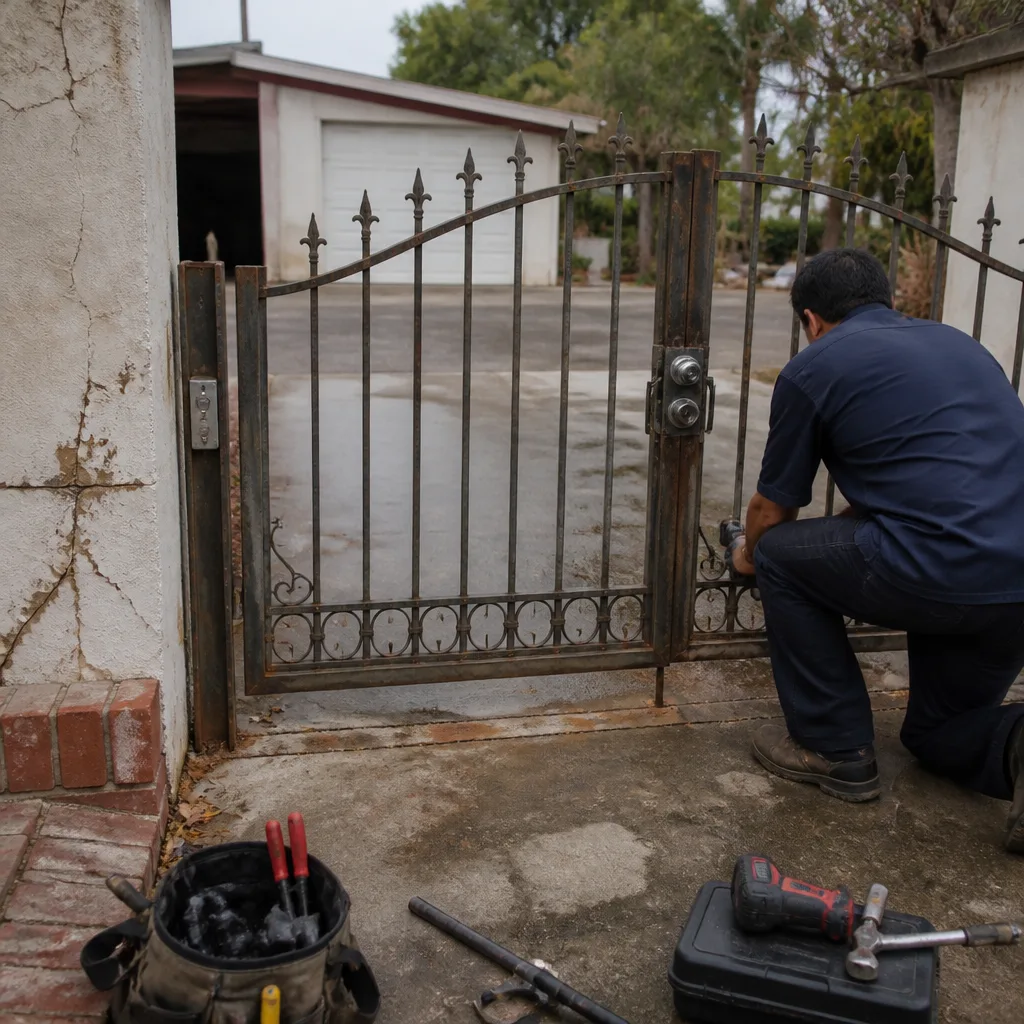 Before
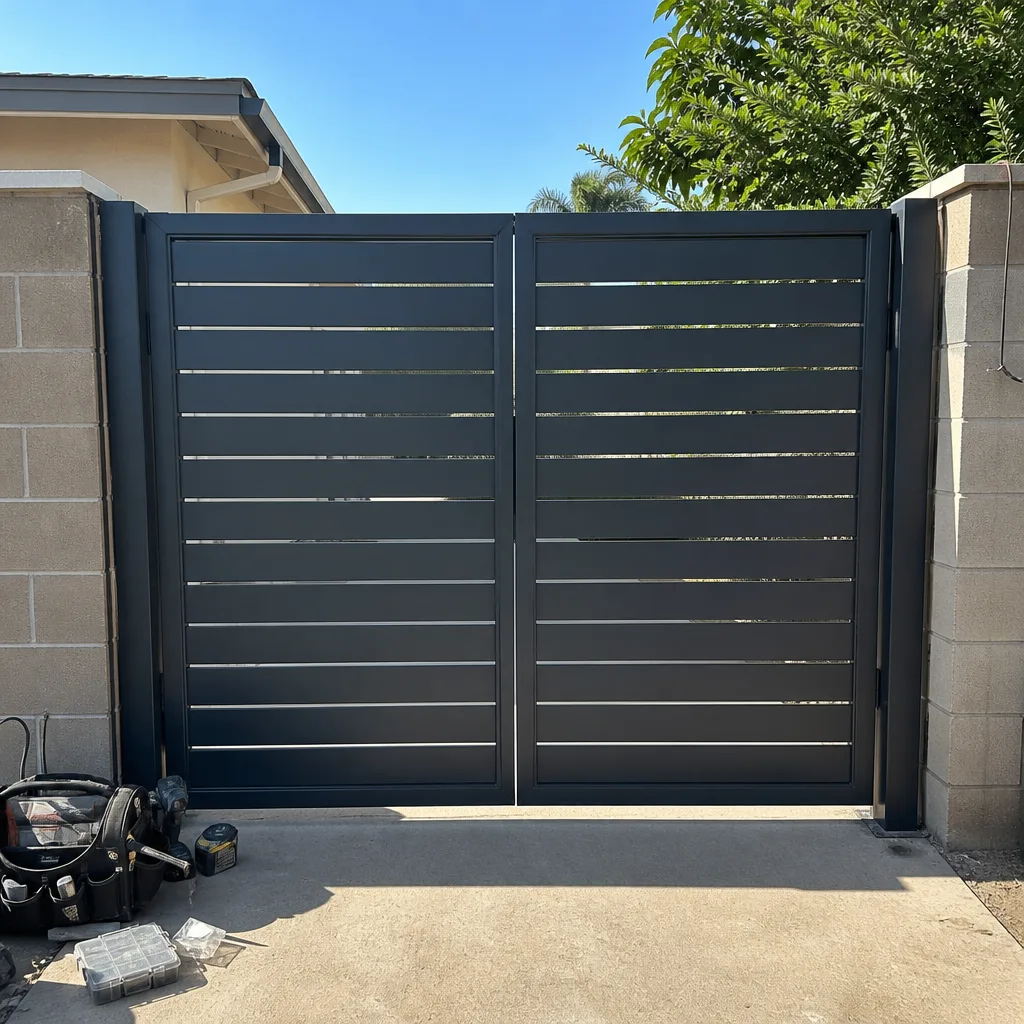 After
After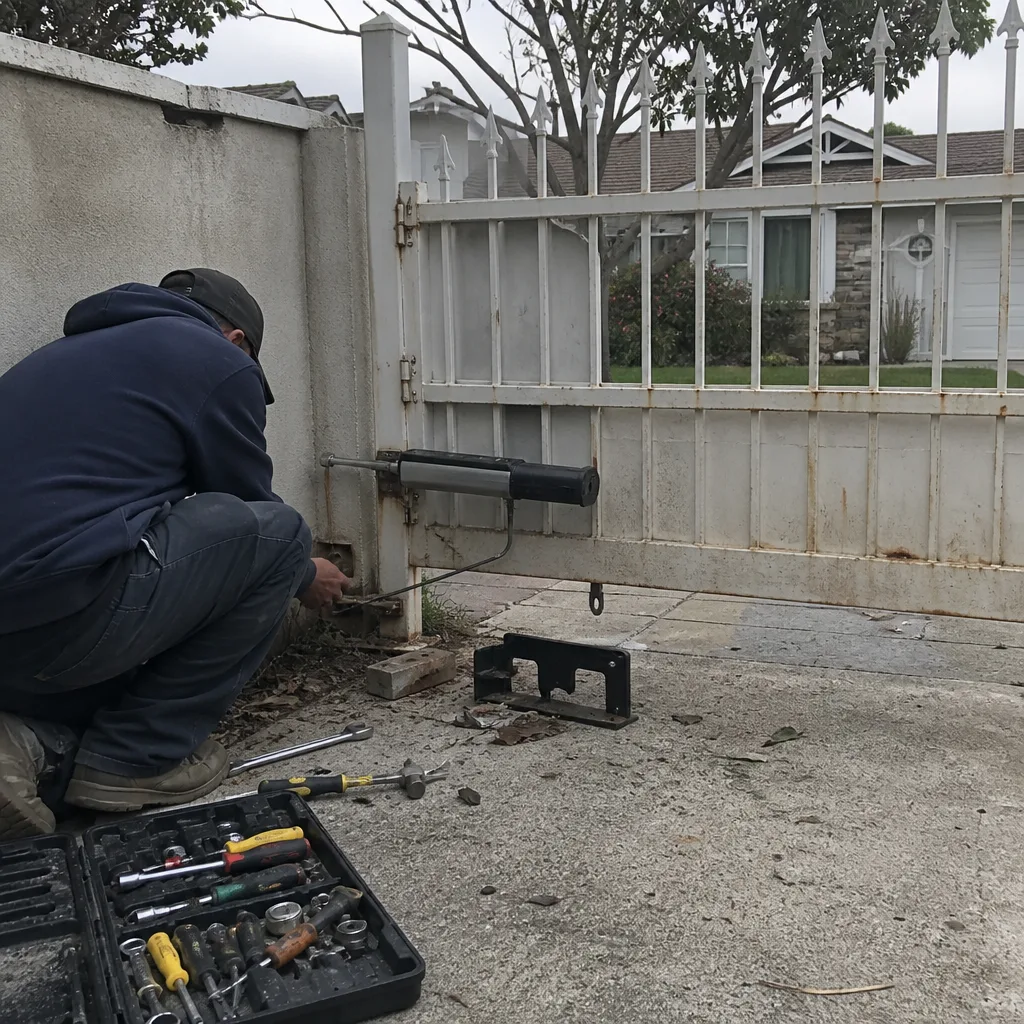 Before
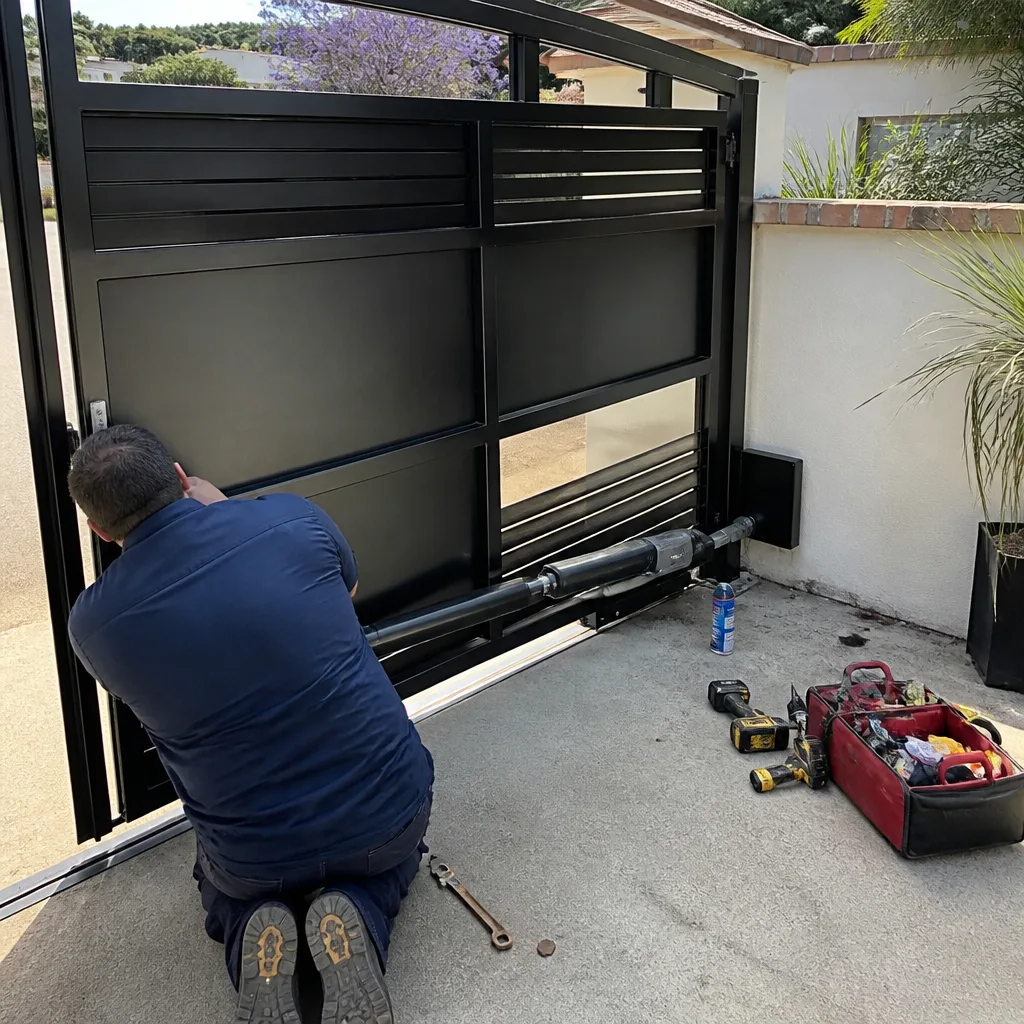 After
After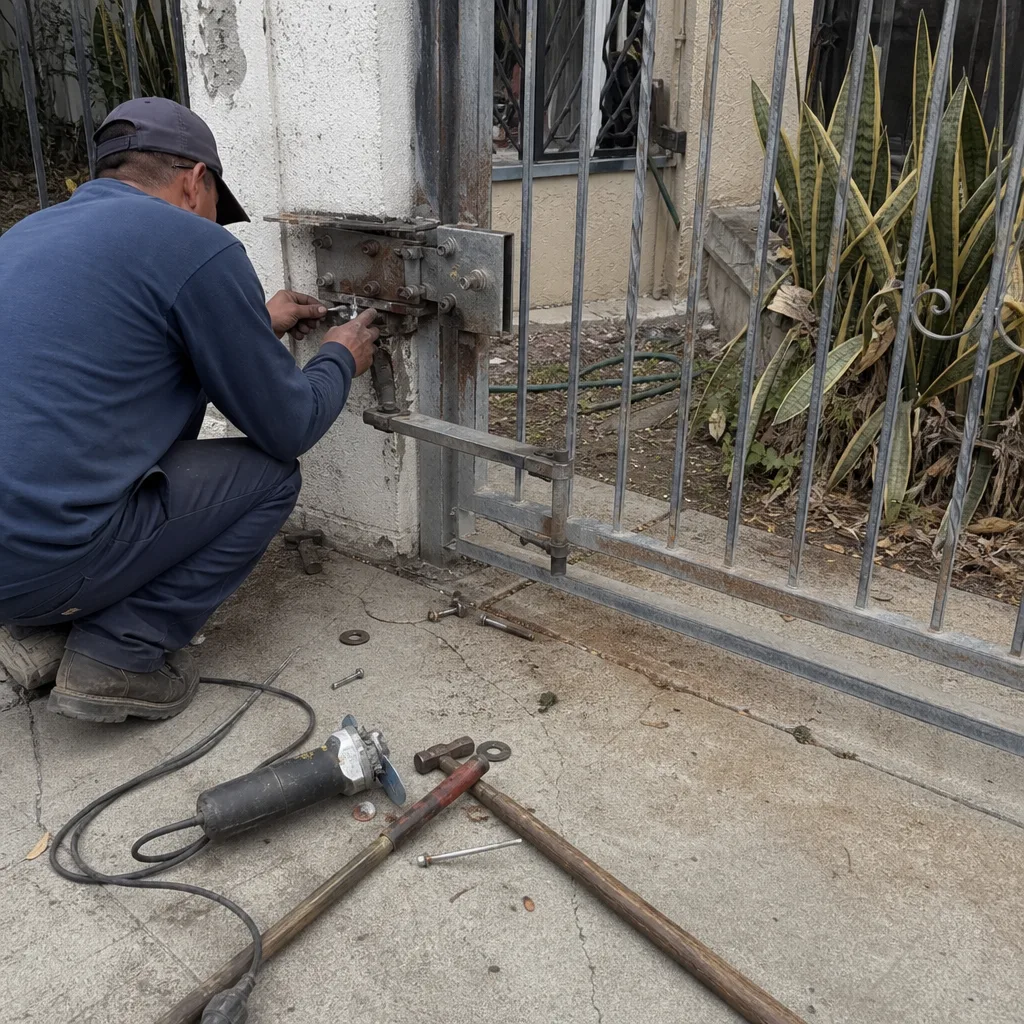 Before
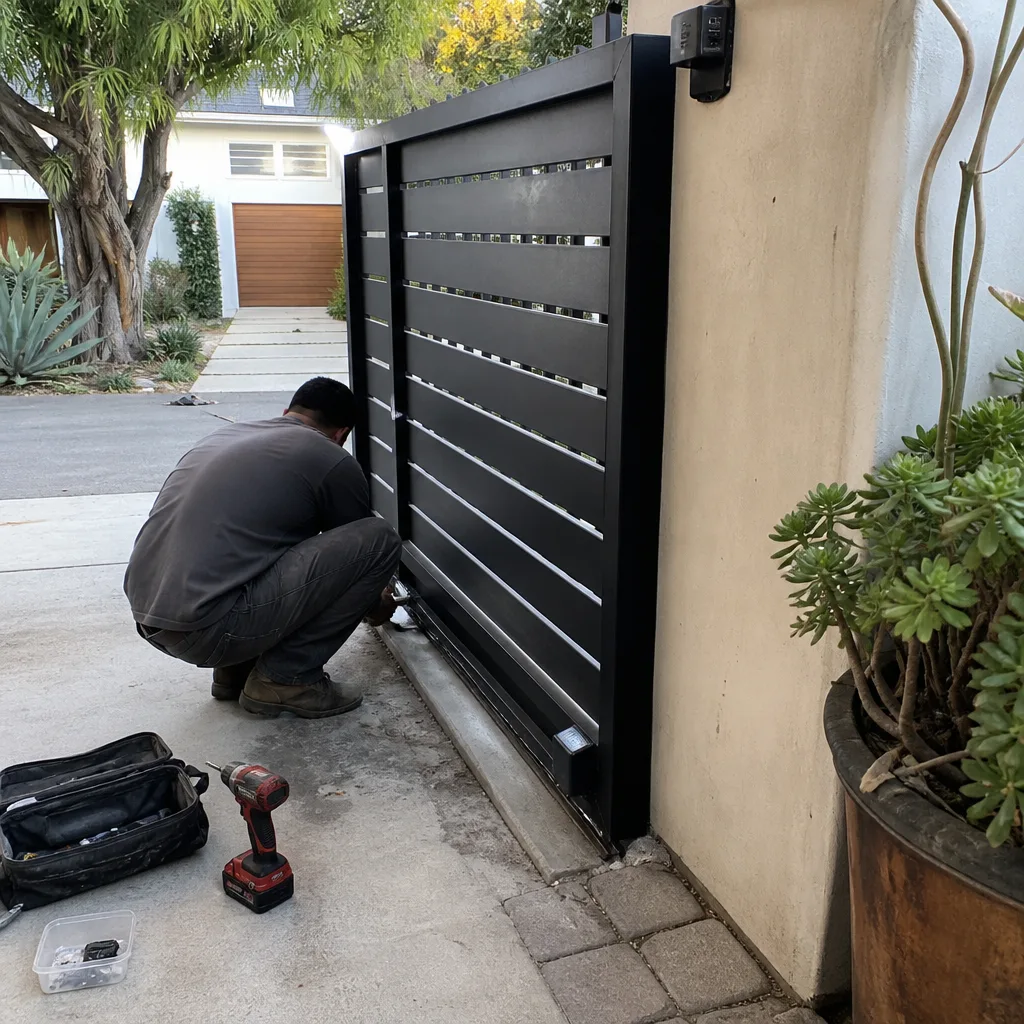 After
After